Looking for an accomodation near Bulgaria?
Click here to see all the facilities available near Bulgaria
If you’re planning a trip to Romania, it’s worth considering venturing a little further south to discover Bulgaria, the country that stretches beyond the Danube and shares with Romania a fascinating history, Balkan roots and a unique ability to surprise travellers. Adding a few days of Bulgaria to a Romanian itinerary doesn’t require major detours: Sofia is approximately 400 km from Bucharest along the route that crosses the Giurgiu-Ruse border, and the variety of experiences Bulgaria offers — Orthodox monasteries, Roman cities, Black Sea coastline and wild mountains — makes it a natural and richly rewarding complement to any Romanian tour.
Bulgaria is one of Europe’s oldest states, with a history rooted in Thracian, Greek and Roman civilisations, and it has left an extraordinary number of UNESCO sites, medieval monuments and unspoilt villages across its territory. The country is a member of the European Union and from 1 January 2026 has joined the Eurozone, adopting the euro as its official currency in place of the Bulgarian lev.
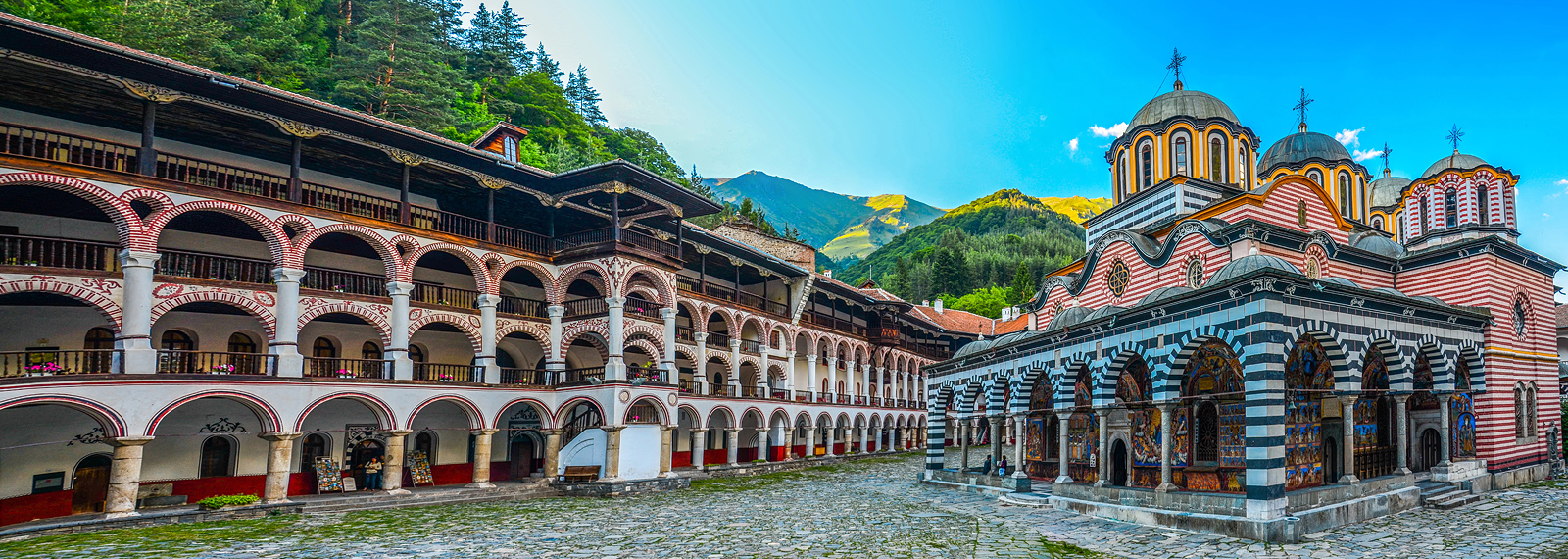
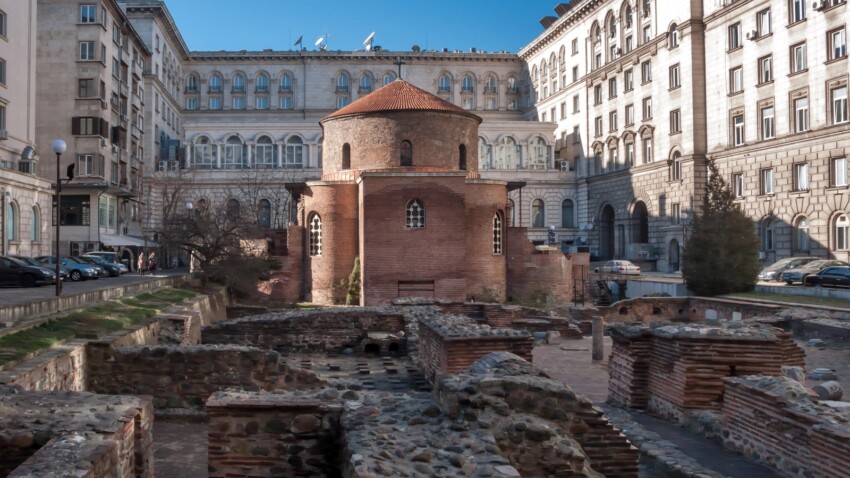
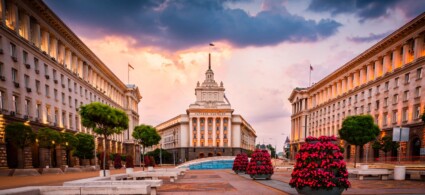
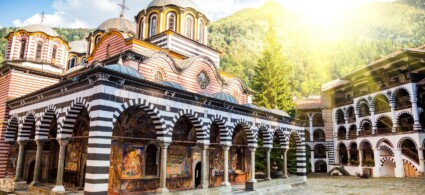
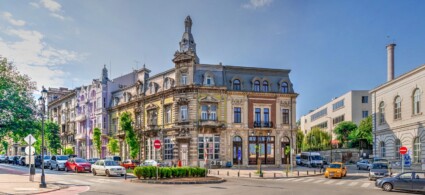
Bulgaria’s attractions cover a surprisingly broad spectrum for a country of modest size. The capital Sofia gathers within a few square kilometres Roman ruins of ancient Serdica, the majestic Alexander Nevsky Cathedral with its golden dome and a vibrant creative district, all nestled between the skyscrapers of the modern centre and tree-lined streets from the communist era. Just outside the city lies the Rila Monastery, a UNESCO World Heritage site and spiritual symbol of the nation, with its frescoes covering over 1,200 square metres and the medieval Hrelyo Tower.
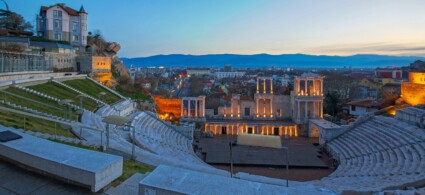
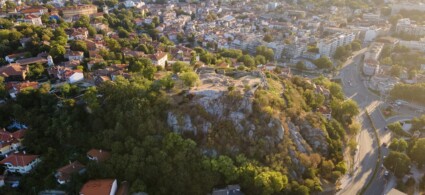
Moving eastward, Plovdiv — European Capital of Culture in 2019 — offers a Roman theatre from the 2nd century still in use, the colourful alleyways of the old town with Bulgarian Renaissance mansions and the Kapana district, transformed in recent years into a creative hub with art galleries and cafés. Further north, Veliko Tarnovo retains the aura of a medieval capital: the Tsarevets fortress perched above the Yantra river is the country’s most evocative monument, complemented each summer evening by a Sound and Light show.
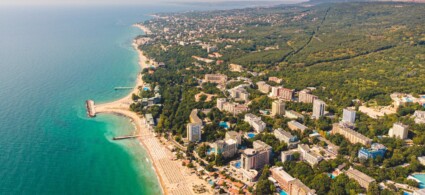
The Black Sea coast alternates cultural and seaside destinations: the historic peninsula of Nessebar, with its forty Byzantine churches a UNESCO World Heritage site, and the more authentic Sozopol, founded by the Greeks in 610 BC, lie just kilometres apart. In the southern interior, the Valley of Roses near Kazanlak produces over 60% of the world’s rose oil and each May hosts one of Europe’s most photographed festivals. The Rhodope Mountains hide instead the spectacular Trigrad Gorge with the Devil’s Cave, whose 42-metre underground waterfall is among the highest accessible to the public in Europe. For mountain lovers, Bansko is the gateway to Pirin National Park, a UNESCO World Heritage site with 45 peaks above 2,500 metres and Bosnian pine forests among the oldest on the continent.
Bulgaria is accessible from most European airports with direct flights to Sofia with carriers including Bulgaria Air, Ryanair and Wizz Air, with flight times of approximately two hours. Direct flights also operate to Varna and Burgas during the summer season, useful for those wishing to begin their journey on the Black Sea coast. If you’re already in Romania, you can reach Bulgaria by land via the Friendship Bridge between Giurgiu and Ruse on the Danube, the main crossing accessible by car or with international coaches connecting Bucharest to Sofia in approximately seven hours.
There is also a direct rail link between Bucharest and Sofia with daily departures, although journey times are longer than by bus. For those travelling from Western Europe, EuroCity trains connect Sofia to Istanbul, Belgrade and Vienna with convenient connections. Once in Bulgaria, a hire car remains the most convenient way to reach attractions outside urban centres: the country is relatively compact, but the mountain roads to Rila Monastery, Trigrad Gorge or Belogradchik Rocks require longer travel times than their straight-line distances might suggest.
Bulgaria’s international telephone dialling code is +359: to call a Bulgarian number from abroad you need to dial 00359 followed by the local number, omitting the initial 0 of the area code.
Bulgaria observes Eastern European Time (EET, UTC+2) and is therefore one hour ahead of the UK and other Central European countries, both during standard time and daylight saving time.
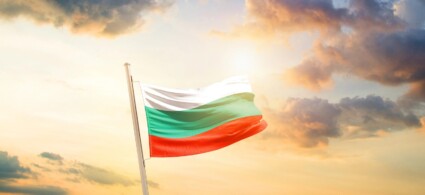
Bulgaria’s national flag is a tricolour with horizontal stripes: from top to bottom the colours are white, green and red. Adopted in its present form in 1878 following liberation from the Ottoman Empire, white symbolises peace, green represents the country’s agricultural wealth and red embodies the courage of the Bulgarian people.
From 1 January 2026 Bulgaria has adopted the euro as its official currency, becoming the twenty-first country of the Eurozone. The Bulgarian lev, which for decades had remained pegged to the euro at the fixed rate of 1.95583 lev per 1 euro, ceased to be in circulation. Travellers will therefore need no currency exchange.
Bulgaria is located in south-eastern Europe, in the eastern part of the Balkan Peninsula. To the north the Danube marks the natural border with Romania; to the east the country faces the Black Sea; to the south it borders Greece and Turkey; to the west it borders Serbia and North Macedonia. Sofia, the capital, is located in the western part of the country.
Bulgarian electrical outlets are compatible with those used in most European countries: Bulgaria adopts the European standard Type C and Type F, with voltage 220-230V and frequency 50Hz. Travellers will have no need for adapters to recharge their electronic devices.
 Hotel
Hotel  Budget accommodations
  Apartments
  Family Hotel
  Luxury Hotel