Sofia Balkan Palace
Sofia - 5,Sveta Nedelya Square
Book now
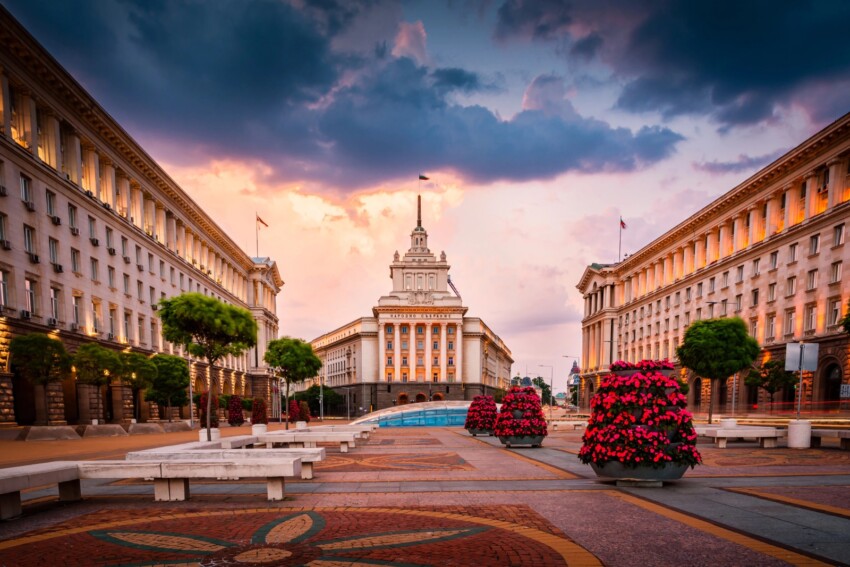
Sofia is the capital of Bulgaria and the country’s largest city, with over 1.2 million inhabitants in the metropolitan area. It’s also one of Europe’s most affordable capitals, a city that surprises with the density of layered history compressed into just a few square kilometres of city centre: Roman ruins surface beneath the streets and metro stations, medieval churches survive surrounded by twentieth-century buildings, and the magnificent Alexander Nevsky Cathedral with its golden dome dominates a square where a fifth-century early Christian basilica, a fifteenth-century Ottoman mosque and a nineteenth-century neoclassical palace stand side by side. This layering is not disorder: it is the visual synthesis of three thousand years of uninterrupted history.
Sofia was the capital of Thrace, a Roman city known as Serdica—so beloved by the Emperor Constantine the Great that he considered it as a possible seat of the Empire instead of Byzantium—then a medieval Bulgarian settlement and finally an Ottoman capital of the Balkans for nearly five centuries. Liberation in 1878 transformed it into the capital of the new Bulgarian state: within a few decades, the small Ottoman town was covered with tree-lined boulevards, opera houses, museums and embassies modelled on the capitals of Central Europe. The result is a city of composite identity, bearing the marks of every era without hiding any of them.
Behind the city, visible from almost every point in the centre, rises Mount Vitosha, a massif reaching 2,290 metres that allows summer hiking and winter skiing in less than thirty minutes by public transport from the city centre. It’s one of Europe’s most unusual urban skylines: a major capital with an Alpine mountain as its permanent dramatic backdrop.
Sofia is best explored on foot in the historic centre and by public transport for more outlying destinations. The main attractions are concentrated in a compact area around Independence Square and Alexander Nevsky Cathedral, but the city is large enough to surprise those who venture off the beaten track.
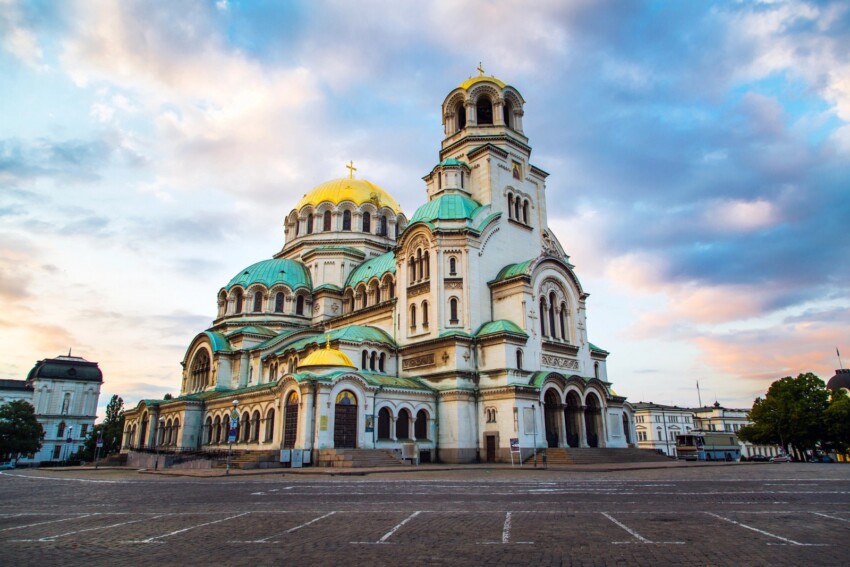
The Alexander Nevsky Cathedral is Sofia’s most iconic landmark and one of the largest religious buildings in the Balkans: built between 1882 and 1912 in Russo-Byzantine style to commemorate Russian soldiers who fell in the 1877–78 war of liberation, it can hold up to 5,000 worshippers and its central gilded dome reaches 45 metres in height. The lateral bell tower, clad in green oxidised copper, is visible from almost everywhere in the city centre and serves as a natural landmark for those navigating the old town.
The interior is among the most sumptuous in Bulgarian Orthodoxy: the mosaics, frescoes, polychrome marble and bronze chandeliers were created by Russian, Italian and Bulgarian artists over three decades of work. The iconostasis in white Carrara marble with onyx inlays is 6 metres high and 30 metres wide, and the baldachin above the high altar is gilded. The crypt beneath the church houses the largest collection of Bulgarian icons from the 14th to 19th centuries: over 300 pieces of outstanding artistic value, including examples from the Tarnovo, Bansko and Tryavna schools. The square in front hosts an antiques and icons market every weekend, frequented by collectors from across Europe.
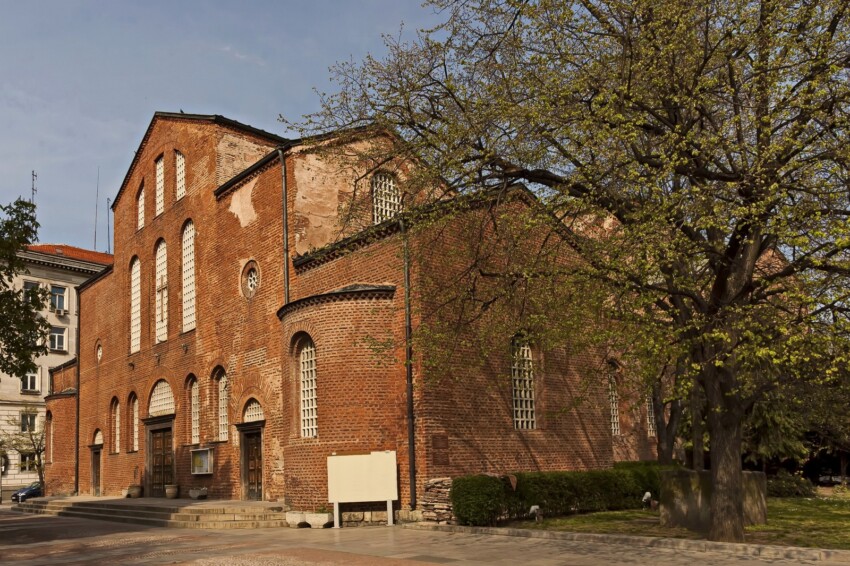
Just a few steps from Alexander Nevsky Cathedral, the Basilica of St Sofia is the building that gave its name to Bulgaria’s entire capital. Built in the 6th century during the reign of Emperor Justinian I, it is one of the best-preserved early Christian churches in the Balkans and a rare example of proto-Byzantine architecture outside Istanbul. The three-nave structure with semicircular apses and barrel vaults in Roman brick has undergone centuries of transformation — it served as a mosque for four centuries during Ottoman occupation, lost its minarets in an 1858 earthquake and was later desecrated — but regained its function as an Orthodox church after Bulgarian liberation.
Excavations conducted beneath the basilica’s floor in recent decades have revealed the remains of four earlier religious buildings layered on the same sacred spot, dating back to the 4th century AD. Part of these remains can be seen via an underground passage beneath the central nave. Next to the basilica are the tombs of Bulgaria’s national poet Ivan Vazov and politician Aleksandar Stamboliyski, two of the most celebrated figures in modern Bulgarian culture.
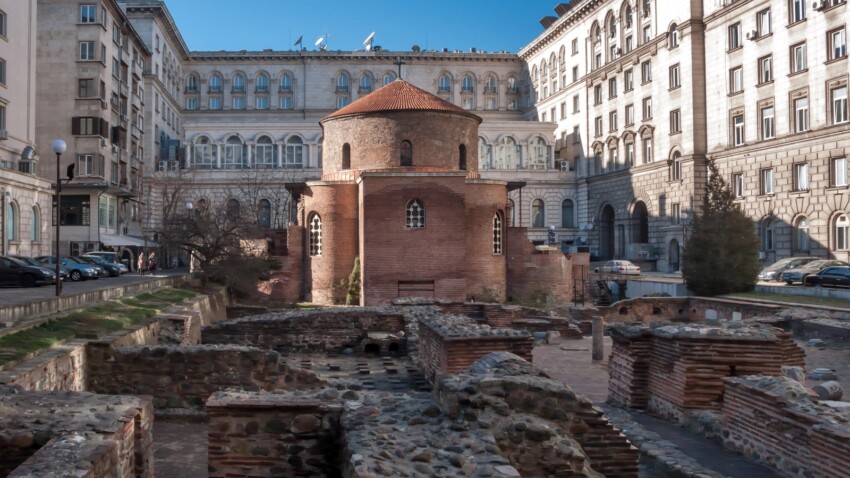
Hidden in the courtyard of a hotel complex in Sofia’s centre, the St George Rotunda is the city’s oldest building and one of the best-preserved structures from late antiquity throughout Bulgaria. Built in the 4th century AD as part of the imperial bath complex of Roman Serdica — the city that Emperor Constantine I famously called “my Rome” — the rotunda is a circular building in Roman brick measuring 10 metres in diameter, topped by a dome that rises 14 metres: proportions that directly echo the great round buildings of Roman imperial architecture.
The paint layers inside tell the entire history of the city in a single space: 4th-century frescoes beneath 10th–12th-century frescoes beneath Ottoman decorations that covered everything when it was converted into a mosque in the 14th century. 20th-century restoration has revealed this pictorial stratigraphy, leaving it partially visible so all layers remain legible. The rotunda is open daily and entry is free; it is located literally fifty metres from the grand Hotel Balkan, recognisable by the arched portal leading to the internal courtyard.
Independence Square — Ploshtad Nezavisimost — is the institutional heart of Sofia: a large rectangular urban space some 300 metres long surrounded by buildings housing Bulgarian state power. On the north side stands the Presidential Palace, a sober neoclassical building from 1955 in front of which the daily changing of the guard takes place at noon, with soldiers in historic Bulgarian uniforms performing a ceremony lasting several minutes that appeals to tourists. On the east side is the Council of Ministers Palace and on the west the National Palace of Culture from 1981, the largest multifunctional cultural centre in the Balkans with over 11,000 square metres of exhibition and conference spaces.
Beneath the square, accessible from the Serdika metro station entrance, lie the remains of ancient Roman Serdica: an extensive complex of walls, towers, paved streets and foundations of public buildings from the 3rd–4th century AD that extends nearly 200 metres below street level. Visiting is possible even without taking the metro, via a dedicated pedestrian entrance: it is one of Bulgaria’s most accessible and best-illustrated urban archaeology sites, with explanatory panels in Bulgarian and English that reconstruct the layout of the Roman city.
The National Museum of History in Sofia is Bulgaria’s largest museum and one of the richest in the Balkans: housed in the former government residence at Boyana, south of the historic centre at the foot of Mount Vitosha, it holds over 650,000 objects covering the entire history of Bulgaria from prehistory to the present day. The Thracian gold collection is the world’s most important for this civilisation: rhyta, cups, pectorals and diadems in solid gold from the 4th–3rd century BC of a technical refinement that still astounds goldsmiths today. Among the most celebrated pieces are the Panagyurishte Treasure, a series of nine solid gold rhyta from the 4th century BC decorated with mythological scenes, and the Letnitsa Treasure, with its gilded silver horse plaques.
The museum is reached from the city centre by bus number 63 or taxi in about twenty minutes. We recommend spending at least three hours here: the halls covering prehistory and the Bronze Age, Roman finds, the medieval Bulgarian section and the 19th-century Bulgarian National Revival are all of great interest and cannot be rushed through. For up-to-date opening times and ticket information, consult the National Museum of History website.
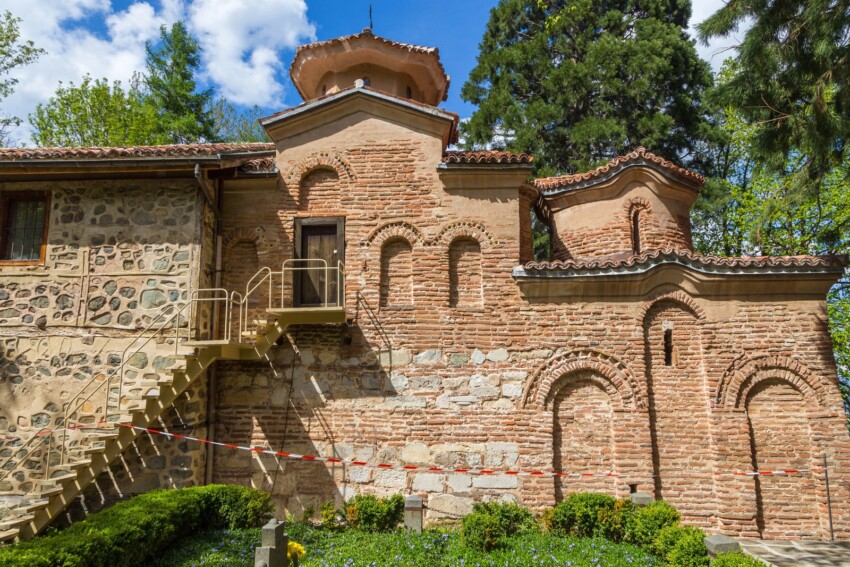
A few kilometres from the National Museum of History, in the residential suburb of Boyana at the foot of Vitosha, stands the Church of Boyana, one of Bulgaria’s UNESCO World Heritage Sites and an absolute masterpiece of medieval European painting. Built in three phases between the 10th and 13th centuries, the church preserves a cycle of frescoes from 1259 of such artistic quality that it anticipates by almost half a century the themes and techniques of Italian painting in the 14th century: the faces of sacred figures possess an expressiveness and psychological realism unparalleled in contemporary art, and the donors portrayed on the west wall — the boyar Kaloyan and his wife Desislava — are among the most intense portraits in the entire European Middle Ages.
Access to the church is restricted to small groups to protect the frescoes from moisture: visits last about ten minutes per group and advance booking is strongly recommended, especially in summer months. The church can be reached from Sofia’s centre by taxi or bus, often combining the visit with the National Museum of History just minutes away by car. Avoid turning up without a reservation on summer weekends: there is a real risk of being unable to enter. To book, consult the Church of Boyana website.
In the heart of Sofia’s historic centre, just steps from the Central Market, stands the Banya Bashi Mosque, the only still-functioning mosque in Bulgaria’s capital among the dozens that existed during the Ottoman period. Built in 1576 by architect Mimar Sinan — the same man who designed the Mosque of Süleyman the Magnificent in Istanbul and the Selimiye Mosque in Edirne — it is an elegantly proportioned building with a single large hemispherical dome 15 metres in diameter and a slender 43-metre minaret. The interior is open to non-Muslim visitors outside prayer times.
Right next to the mosque are Sofia’s Public Mineral Baths, an Art Nouveau building from 1913 that taps into the naturally occurring hot springs — between 37 and 43°C — in this part of the centre. The main building, with its green and yellow ceramic facades and onion domes, is among Sofia’s finest: after a lengthy restoration, it has partially reopened as a cultural centre and public spa. The outdoor public fountains, where Sofians still come today to fill bottles with hot mineral water, remain freely accessible.
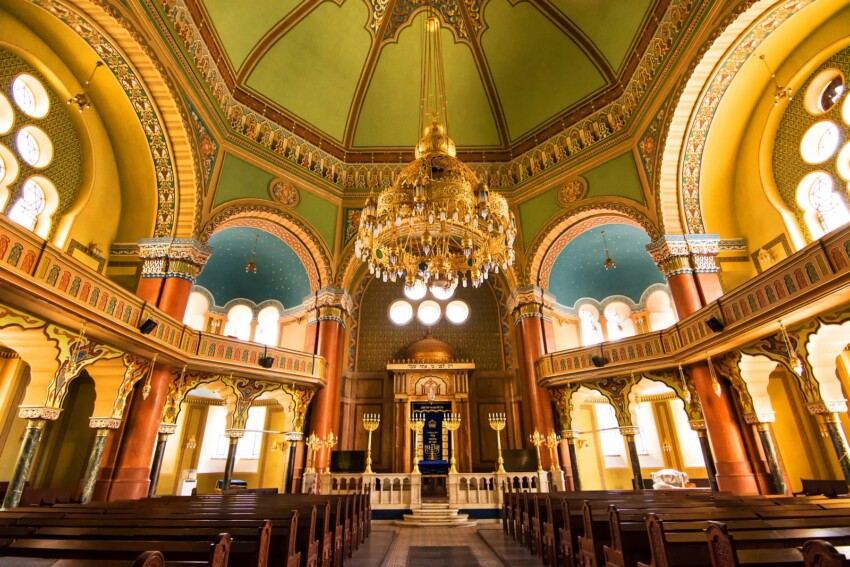
The Sofia Synagogue is the largest synagogue in the Balkans and the third largest in Europe: built between 1905 and 1909 in Moorish–Art Nouveau style to designs by Viennese architect Friedrich Grünanger, it can accommodate up to 1,300 worshippers and its central dome of 23 metres is clad in green copper, visible from afar in the city centre skyline. Sofia’s Jewish community — one of the oldest in the Balkans, with Sephardic roots dating back to the 1492 expulsion from Spain — survived the Second World War virtually intact thanks to popular opposition and support from some Orthodox clergy against Nazi deportation, an episode of which Bulgaria is justifiably proud.
The synagogue’s interior is richly decorated with mosaics, stained glass and a bronze chandelier weighing nearly 2,000 kg, Bulgaria’s largest. On the ground floor is a small museum on the history of Bulgaria’s Jews, with documents, photographs and ritual objects telling five centuries of Jewish presence in the country. The synagogue is open to visitors on weekdays with reduced hours; booking is recommended for groups.
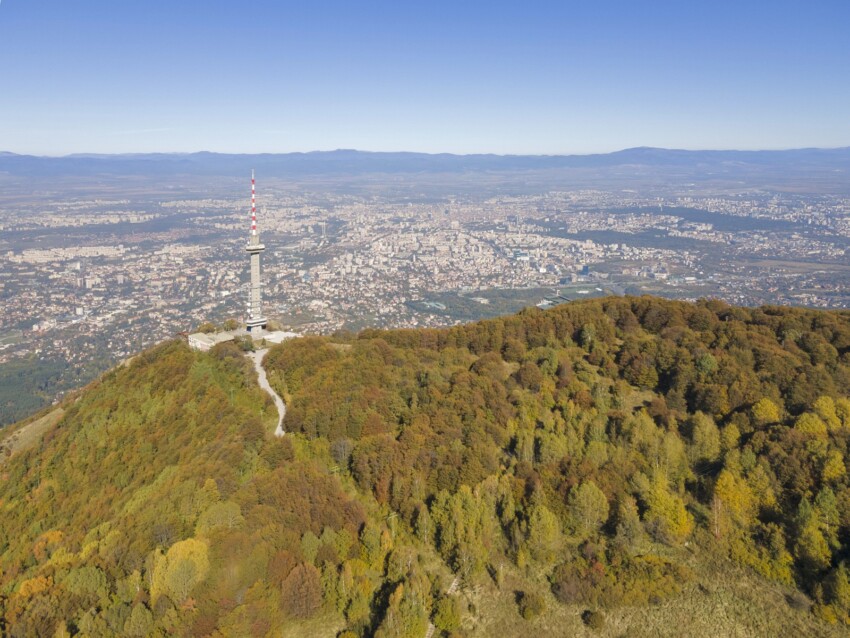
Mount Vitosha is the Balkans’ oldest urban nature park, established as a reserve in 1934, and the landscape feature that more than any other characterises Sofia in the panorama of European capitals. The main peak, Cherni Vrăh (2,290 m), is reached in summer via several marked trails starting from the city’s southern neighbourhoods or from the upper station of the Simeonovo cable car. In winter, the pistes at Aleko, served by ski lifts, are popular weekend destinations for Sofians.
The fastest way to reach Vitosha from the centre is the Simeonovo cable car, which departs from the residential district of the same name, reachable by trams 12 and 19 from central Independence Square. The cable car takes just minutes to reach the Aleko plateau at 1,810 metres, from which trails lead to the peak and to the distinctive boulder fields — Vitosha’s glacial moraines, formed by enormous blocks of syenite dragged by the glacier — that are among the most unusual geological spectacles in the metropolitan area of any European capital. The walk from the city’s last residential neighbourhoods to the boulder fields takes about two and a half hours on a marked trail.
Vitosha Boulevard is Sofia’s main promenade: a pedestrian axis of about one and a half kilometres running from Sveta Nedelya Square down towards the National Palace of Culture, with Mount Vitosha perfectly centred in the perspective at the end of the street. Lined with international shops, outdoor cafés, bookshops and ice cream parlours, it is Sofia’s main gathering place in any season: bustling at weekends, quieter on weekday mornings.
On streets parallel to the boulevard are some of Sofia’s most interesting restaurants, ranging from traditional Bulgarian cuisine establishments serving shopska salad and meat grills to more creative venues that in recent years have helped build the city’s gastronomic reputation. The Women’s Market — a food and craft market open weekends in a courtyard in the centre — and the Central Market, built in 1911 to designs by a Viennese architect, are the most authentic stops for understanding everyday Sofia beyond the tourist attractions.
The historic centre, in the area between Alexander Nevsky Cathedral, Independence Square and Vitosha Boulevard, is the most suitable location for most visitors: excellent boutique hotels, well-run hostels and short-term apartment rentals are concentrated in this area, with main attractions reachable on foot in just a few minutes. Prices remain among the most affordable of European capitals even in the mid-to-upper segment, making Sofia one of the most budget-friendly destinations in the European Union.
The Lozenets neighbourhood, south of the centre along Vitosha Boulevard heading towards the mountain, is the preferred choice for travellers seeking a more residential and peaceful atmosphere without sacrificing proximity to the centre: tree-lined avenues, neighbourhood cafés and closeness to Borisova Gradina Park make it a pleasant base, just ten minutes by tram from the main square. It’s also the neighbourhood where many of the city’s most carefully maintained short-term apartment rentals are concentrated.
For those who prioritise convenience over atmosphere, the area around the central bus and railway station — approximately one-and-a-half kilometres north of the centre — offers numerous mid-range hotels with prices below the city average and easy access to public transport to reach the centre and airport. It’s not the most picturesque part of Sofia, but it’s functional, and the metro connected to the station reaches the centre in just a few minutes.
Sofia is Bulgaria’s main transport hub and one of south-eastern Europe’s major airports. It’s accessible by direct flights from across Europe, by train from central Europe and neighbouring Balkan countries, and by car from Bulgaria’s main destinations via a steadily developing motorway network. Its position in the western part of the country, relatively close to the borders with Serbia and North Macedonia, also makes it a natural starting point for broader Balkan itineraries.
Sofia Airport International (SOF) is located approximately 10 km east of the centre, connected to the city by a direct metro line opened in 2020 which is the quickest and most convenient way to reach the centre: Metro Line 2 takes around 25 minutes from the airport station to the centrally located Serdika Station, with services every five minutes during peak hours.
Alternatively, licensed taxi companies charge fixed rates for centre-to-airport transfers; it’s always worth checking the fare before getting in and only use companies with certified meters.
Sofia Central Station — Central Gara — is Bulgaria’s most important railway hub and an architecturally interesting building in its own right, built in 1974 with a large modernist-inspired steel and glass tensile structure. Trains depart Sofia for all Bulgaria’s major cities: Plovdiv (2 hours), Varna (approximately 6 and a half hours), Ruse (4 and a half hours), Bansko (3 and a half hours with a change at Septemvri). Internationally, overnight trains connect Sofia with Belgrade, Budapest and Istanbul, making Bulgaria’s capital reachable by train from across Europe via a fascinating railway route that crosses the Balkans from north to south.
The areas surrounding Sofia offer some of Bulgaria’s most important destinations, all reachable as day trips. Hiring a car is the most flexible way to combine multiple sites in a single journey, but public transport covers the main destinations well with frequent coaches from Sofia’s bus station. The variety of possible excursions — from monastery to medieval town, from nature reserve to thermal springs — makes Sofia one of Bulgaria’s best bases for exploring the country.
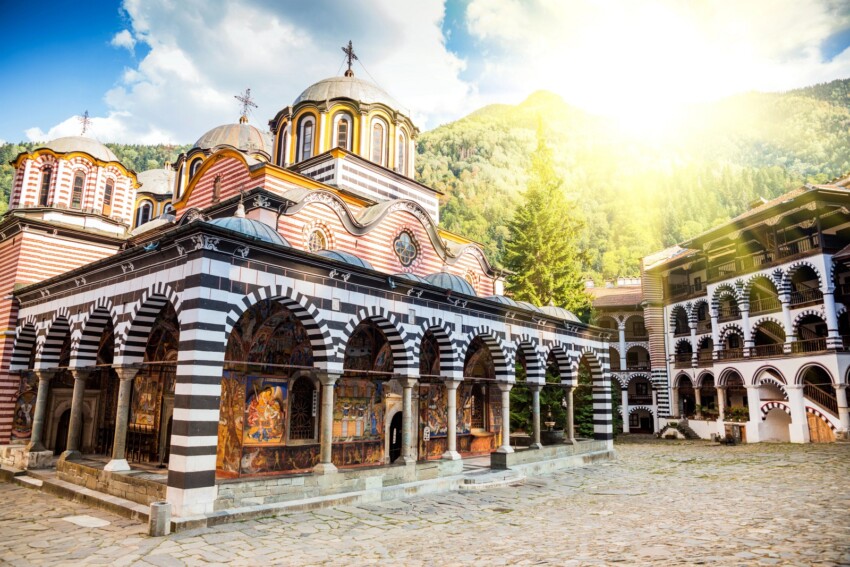
117 km south of Sofia, Rila Monastery is Bulgaria’s most visited destination after the capital: a UNESCO World Heritage site since 1983, with frescoes covering 1,200 square metres of portico, the 10-metre-high iconostasis of the main church and the 14th-century Hrelyo Tower, it’s essential for anyone visiting Bulgaria. The journey from Sofia takes approximately one hour and forty-five minutes by car on the A3 Struma motorway. Numerous organised day tours depart every morning from major city-centre hotels.
110 km east of Sofia, the town of Koprivshtitsa is the finest example of Bulgarian Renaissance architecture and the place where, on 20 April 1876, the uprising against Ottoman occupation began, leading to Bulgaria’s liberation. Six house-museums open to the public with a combined ticket showcase original 19th-century interiors, with coffered ceilings and collections of period weapons and objects. The town is reachable by train from Sofia with a change at Septemvri, or by car in approximately an hour and a half.
On the southern slopes of Mount Vitosha, just 8 km from Sofia’s centre, Dragalevtsi Monastery is one of the most accessible peaceful places from the capital: founded in the 14th century and surrounded by a forest of beech and hornbeam, it preserves well-executed 15th-century frescoes and an active small monastic community. It’s reachable on foot from tram 93’s terminus in approximately forty minutes’ forest walk, or directly by car. Combining it with a walk on Vitosha makes for a particularly rewarding excursion.
Just 30 km west of Sofia, the industrial town of Pernik hosts the International Kukeri Festival every late January, the Balkans’ largest gathering of traditional masks. Kukeri are ritualistic figures of Thracian origin in costumes covered with bronze bells weighing up to 40 kg and extraordinarily varied painted wooden masks: the festival attracts groups from across the Slavic and Balkan world and transforms Pernik for two days into the centre of European ethnography. Outside the festival, Pernik hosts an interesting Kukeri Museum open year-round.
73 km south of Sofia, at the foot of Mount Musala (2,925 m, Bulgaria’s and the Balkans’ highest peak), the Borovets ski resort is Bulgaria’s oldest, frequented since the late 19th century as a summer residence of Bulgaria’s royal family. In winter it offers slopes for all difficulty levels; in summer it’s the ideal base for ascending Musala, Bulgaria’s most challenging and rewarding trek, with panoramic views from the summit that on clear days stretch to the Aegean Sea. The journey from Sofia by car takes approximately one hour.
What's the weather at Sofia? Below are the temperatures and the weather forecast at Sofia for the next few days.
Sofia is located in the north-west of Bulgaria, in the Sofia plain surrounded by four mountain ranges — Vitosha, Lozenska, Lyulin and Balkan. It lies 150 km from Plovdiv to the east, 300 km from Varna on the Black Sea, 117 km from Rila Monastery to the south and approximately 50 km from the Serbian border to the west. It is the westernmost capital of the eastern Balkans, positioned on the historic corridor that connects central Europe with the Bosphorus.
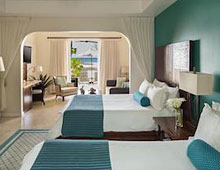 Hotel
Hotel 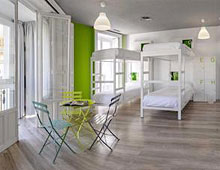 Budget accommodations
 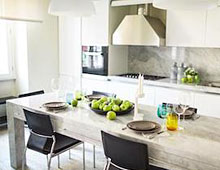 Apartments
  Family Hotel
 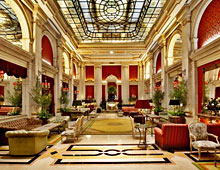 Luxury Hotel