Hotel Insula
Tulcea - Ing. Dumitru Ivanov FN Str.
Book now
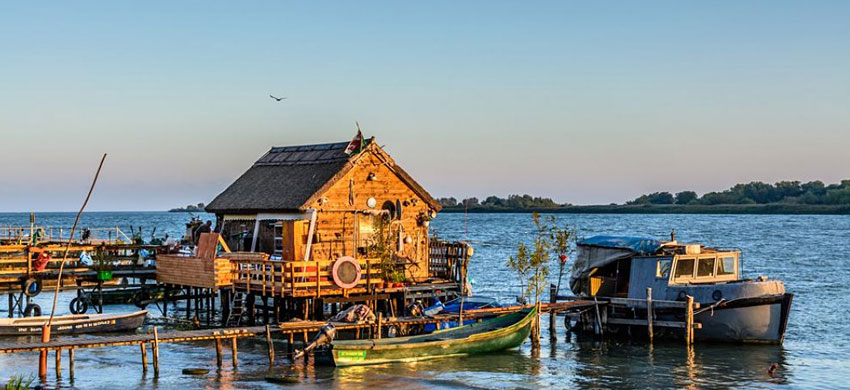
The main city of the Danube Delta is Tulcea, a centre founded by the Dacians in the 7th century BC, conquered by the Romans, subsequently ruled by the Byzantine Empire, the Bulgarian Empire, the Genoese and the Ottoman Empire until becoming Romanian in 1878. Today Tulcea is an important port in the Dobruja region.
Situated at the mouth of one of the three river channels of the Danube, Tulcea is the ideal starting point for visiting these famous wetlands. In the centre of Tulcea you can admire the Church of St Nicholas, built in stone and brick. The building, constructed in Byzantine style in 1865, stands 30 metres high and has 3 towers – two at the front and the third, the largest, in the centre.
Tulcea hosts the International Folk Festival of the Danube Countries and an annual winter carnival.
Tulcea is the natural starting point for discovering the Danube Delta, but the hours you spend in the city itself will also be well spent, given the numerous attractions on offer. Here are the most important ones, to make the most of your visit.
This beautiful mosque was built in 1863, during the reign of Sultan Abdülaziz. It takes its name from him, and is dedicated to him. One of the largest mosques built in the Dobruja region by the Ottoman Empire, the Azizyie Mosque is constructed with walls 85 centimetres thick.
The Azizyie Mosque has 32 windows, of which 18 are raised, allowing a large amount of natural light to filter inside, while also illuminating the inner courtyard, which surrounds the building on three sides. When the mosque was founded, a Turkish school was also established next to it, opening in 1865 and now of course closed. The current minaret, on the other hand, dates to 1897, rebuilt in place of the original using funds from the then ministry of religious affairs and public education.
Located in the centre of Tulcea within a splendid building, the Danube Delta Natural Sciences Museum has been one of Tulcea’s most important cultural institutions for nearly half a century. Opened in 1964 and originally designed as an information and educational point, the museum attracts thousands of Romanian and foreign visitors every year interested in the wonders of the Danube Delta.
In addition to the engaging presentation of flora, fauna, habitats and landscapes that make the Danube Delta a unique place in the world, 3-4 temporary exhibitions are organised each year, presenting various themes to complement the information content of the permanent exhibition. The events are organised using pieces from existing museum collections, or using items from other museums in the country.
Another highlight of the Danube Delta Natural Sciences Museum is the aquarium, which houses a collection of over 200 objects representing 50 species of aquatic organisms (plants, crustaceans, fish, reptiles) specific to the Danube Delta, as well as specimens from the tropical and subtropical regions of Asia, Africa and South America. Here visitors have the opportunity to learn about aspects concerning the biology and ethology of aquatic organisms, how to care for these organisms in captivity, and to receive advice for those interested in aquatics as a hobby.
The Museum of History and Archaeology is the main component of the Gavrilă Simion Ecomuseum Research Institute in Tulcea. It was founded in 1975, when a permanent exhibition of history and archaeology was organised on the site of the ancient Aegyssus fortress. However, its history is entirely identified with the evolution over more than 50 years of the museum institution in Tulcea County.
The museum is also responsible for the administration, conservation and restoration of the archaeological museum heritage. This objective led to the launch of a research programme that developed across the entire territory of Northern Dobruja, one of Romania’s most important archaeological zones.
The Independence Monument is one of Tulcea’s most important tourist attractions, also thanks to its favourable position, which offers a panoramic view of the city from the Danube mouth. The foundation stone of the monument, dedicated to the war of independence and the union of Dobruja with the state of Romania, was laid by Prince Carol I during his visit to Tulcea on 17 and 18 October 1879.
Composed of a dense network of waterways, lakes, reed beds, islands and sand dunes, the Danube Delta is a unique ecosystem in the world. In Tulcea you’ll be spoilt for choice when it comes to setting sail for this unspoilt land, choosing from one of the local tour operators or booking your excursion directly online.
You can take part in private tours lasting 3-4 days, group tours, or simply a few hours’ excursions. There are tours dedicated to birdwatching enthusiasts, which will take you to the areas of the Delta where birds nest, photography tours ideal for photo and video enthusiasts, and even kayak tours, to paddle in complete relaxation and feel at one with the surrounding nature.
Tulcea is built on the south bank of the Sfantu Gheorghe canal, a branch of the Danube. Needless to say, most of the attractions are located right along the waterfront, and therefore it’s advisable to choose this area to stay in the city. Along the Sfantu Gheorghe you’ll find plenty of hotels for all budgets, several restaurants and the departure points for Danube Delta cruises.
To save some money you could choose to stay further inland, but given the competitive prices of hotels, guesthouses and apartments, we wouldn’t recommend it.
Tulcea can be reached by car from Bucharest in about 4 hours along the DN2 road via Harsova, or from Constanța, about 125 kilometres away. Being a city far to the east, we don’t recommend arriving by car from Timișoara or Cluj-Napoca, as the journey is long and tiring; unless, of course, you have several days available.
There are also two railway stations in Tulcea, one dedicated to passenger trains and the other to freight trains. The passenger station, Tulcea Oraș, is the terminus of line 804, which connects the city to Medgidia. Two trains to Constanța and two to Bucharest depart daily from here.
For those deciding to visit Tulcea and the Danube Delta directly from abroad, unfortunately options are limited. There are two airports in the area, Tulcea and Constanța, but the first is closed and the second has no connections from abroad. Similarly, the drive is very long, approximately 23 hours from Milan and 25 from Rome: it’s therefore best to fly to Bucharest and then continue by car hire or coach.
What's the weather at Tulcea? Below are the temperatures and the weather forecast at Tulcea for the next few days.
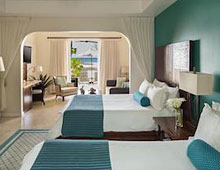 Hotel
Hotel 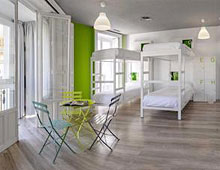 Budget accommodations
  Apartments
  Family Hotel
 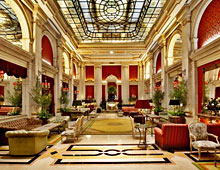 Luxury Hotel