Looking for an accomodation near Republic of Moldova?
Click here to see all the facilities available near Republic of Moldova
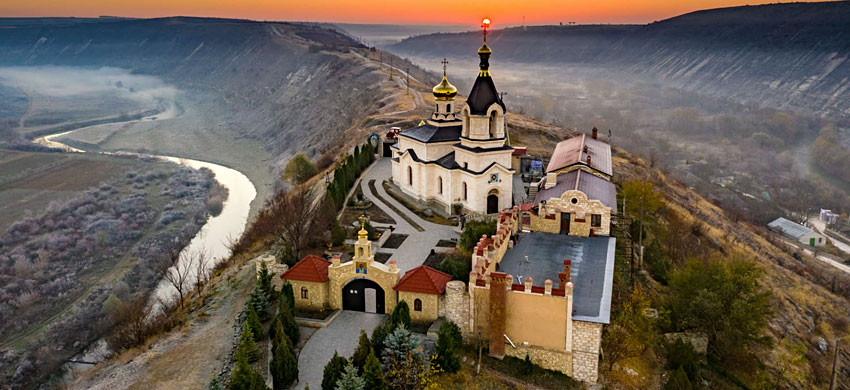
The Republic of Moldova is closely intertwined with Romania. This can cause confusion, as the name Moldavia refers both to an independent state—the Republic—and to a region in northern Romania. Together, they form the historic Moldavian region, once inhabited by the Dacians and later conquered by Germanic and Slavic peoples.
Today, the Republic of Moldova is an underrated tourist destination, yet full of discovery. Natural and cultural attractions abound, and there is a thriving wine industry. However, the legacy of a difficult past still casts a shadow. Yet with an open mind, it’s possible to embark on a journey to explore this land, inhabited by generous and hardworking people.
Moldova is a destination worth visiting year-round, but the best period is undoubtedly summer, when days are long and sunny, and never excessively hot—though the heat island effect can occasionally make Chișinău feel warmer than it actually is.
In winter, travelling around Moldova is more challenging, as road conditions are often poor and driving, especially in remote areas, can be difficult. For wine enthusiasts, we also recommend an autumn visit, ideally between September and October during the harvest season, when wineries operate at full capacity.
Travelling in Moldova is straightforward—you just need a flexible attitude. The country’s attractions are scattered throughout, and whilst infrastructure isn’t particularly developed, it’s worth exploring to discover the 10 most interesting things to see.
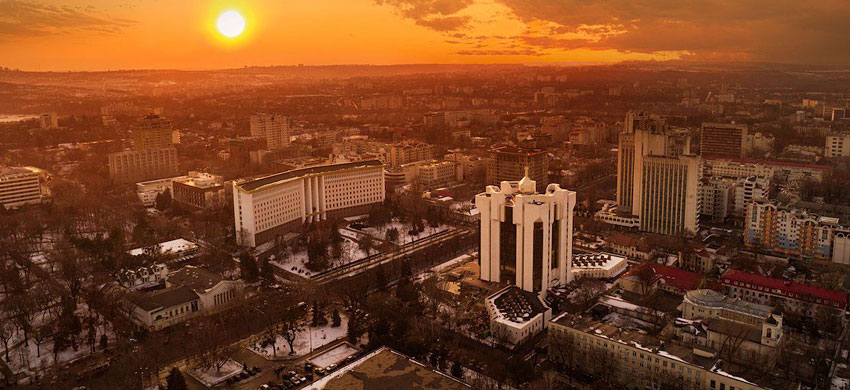
Unless you arrive overland from Romania or Ukraine, the capital, Chișinău, will be your main gateway to the country. It’s home to Moldova’s only international airport, well connected to the UK via the national carrier Air Moldova and several budget airlines.
Chișinău deserves a couple of days. Walking along Stefan cel Mare Avenue, you can visit virtually all the city’s main attractions and palaces. Don’t miss the Arch of Triumph (Arcul de Triumf), the Cathedral of the Nativity (Catedrala Mitropolitană Nașterea Domnului), and the Monument to Stefan cel Mare (Statuia lui Ștefan cel Mare din Chișinău). The Central Market (Piaţa Centrală) is also worth visiting, where you can buy almost anything.
Bălți is Moldova’s second city and equally deserves a visit. Located in the north, it’s sometimes called “the northern capital“. Stroll along the main street, Stefan cel Mare Avenue, to observe the daily life of locals. A block south, Independence Street (Strada Independeţei) is a pedestrianised boulevard with numerous shops, restaurants, a cinema, theatre and the central market.
Be sure to see St Nicholas Church, an Orthodox church with surprising Catholic influences, thanks to Spanish architect Antuan Weismann’s design. In the centre, you can spend a relaxing few hours at Municipal Park (Parcul Municipal), the main city park, for a stroll or refreshment at one of the outdoor cafés, especially in summer.
Imagine stepping back in time to experience the Soviet era. In Transnistria, you can do just that! This territory, located “beyond the Dnestr River” (hence the name), is a de facto independent state but legally part of the Republic of Moldova. Its capital, Tiraspol, is a display of Soviet symbolism, featuring military tanks in the square, Lenin statues, and buildings evoking the communist period.
Visiting Transnistria is fascinating from a historical and cultural perspective, and it’s an entirely unique experience. You must cross a phantom border, guarded by armed sentries who officially have no authority, beyond which Russian is spoken, Cyrillic script is used, and a different currency circulates.
In Transnistria, the Transnistrian ruble is in circulation—a currency with no official international symbol due to the territory’s disputed status, typically identified by the acronyms PRB or RUP. It’s divided into 100 kopecks, available in coins of 1, 5, 10, 25 and 50 kopecks and 1, 3, 5 and 10 roubles, plus banknotes of 1, 5, 10, 25, 50, 100, 200 and 500 roubles.
The Transnistrian ruble is pegged to the US dollar at a fixed rate of 16.1 roubles per dollar. The currency is not accepted outside Transnistria, except by a few bus companies linking Tiraspol to Chișinău.
Carved into rock along the banks of the Dnestr River, Tipova Monastery is one of Moldova’s most fascinating sites. Located in a remote part of the country, this isolation only enhances its beauty. It comprises three parts: the Church of the Holy Cross Festival, St Nicholas Church, and a small hermitage.
Over the centuries, approximately twenty monks have sought refuge in these caves, though theoretically each grotto could accommodate up to 700. Beyond the caves, a path leads to a truly enchanting waterfall.
The Ottoman Bendery Fortress stands just a short distance from the border between Moldova and Transnistria. Dating to the 16th century, it was one of the principal fortifications that resisted the advance of Tsarist Russia in the 1800s. Walking along the ramparts affords spectacular views of the Dnestr River and surrounding valley; a museum on site documents the fortress’s long and rich history.
Mileștii Mici houses the “golden collection”, the world’s largest wine collection—a source of great Moldovan pride and certified by Guinness World Records. Located 20 kilometres from Chișinău, this underground winery extends 85 metres deep, maintaining temperatures between 12 and 14 degrees Celsius and constant humidity, an environment ideal for preserving wine in perfect condition.
In the 15th century, limestone was quarried to build Chișinău. Beneath the empty underground space, the world’s second-largest underground winery was subsequently constructed—a vast tunnel system of over 120 kilometres of intricate underground roads. Today this forms part of Cricova Winery, located just 30 minutes from Chișinău.
You can participate in underground tastings and guided tours; the winery houses 1.25 million bottles of wine. We highly recommend taking a bottle home—you’ll discover fresh, full-bodied wine of excellent quality.
Situated near the Ukrainian border, the city of Soroca overlooks the Dnestr River. Nearby stands the city’s fortress, a perfect representation of medieval architecture and undoubtedly one of the most stunning sights in Moldova. It’s worth the journey to discover a site of enormous historical importance, used to defend the country during wars and sieges. Notably, Soroca is the unofficial capital of the Romani people.
Orheiul Vechi is an archaeological complex overlooking the Raut River with immense historical and cultural significance. Dating to the Dacian period, approximately 2,000 years ago, a museum was established to help visitors understand the area’s vast historical events and significance.
Key events that occurred here include the Tatar and Mongol invasions in the 1st century BC and the occupation by the Golden Horde Khanate in the 14th century. The natural beauty is breathtaking, with caves, ruins, monasteries, ancient baths and fortifications.
The small village of Saharna, home to the Holy Trinity Monastery, is a must-see on any Moldova tour. It’s believed that the footprints of the Virgin Mary are imprinted on one of the area’s rocks, making Saharna a pilgrimage destination for many Moldovans.
Nearby, 22 serene waterfalls cascade after branching from the Saharna River; the most popular is known as Gypsy Hole. Saharna is ideal for nature lovers, offering spectacular views and absolute tranquillity, making it one of Moldova’s most enchanting tourist attractions.
In the following map you can see the location of the main places of interest mentioned in this article.
Moldova’s international telephone code is +373, valid in Transnistria too. To call a Moldovan number from the UK, dial +373 followed by the number, dropping the initial 0 from the local code. Conversely, from Moldova to the UK, add +44 to the UK number, again dropping the initial 0 if calling a landline.
Moldova observes the same time zone as Romania, remaining one hour ahead of the UK year-round. The time zone code is UTC+2, or EET, Eastern European Time.
Moldova’s flag is identical to Romania’s, except for the Moldovan coat of arms at its centre, adopted only in 1990. It features an eagle holding a cross in its beak, an olive branch in its right claw and a sceptre in its left, which according to designer Gheorghe Vrabie symbolises the Latin heritage of the Moldovan people.
Moldova’s currency is the Moldovan leu (plural lei), with the symbol MDL, exchanging at approximately 20 lei per 1 euro. The currency is fairly stable. The leu is subdivided into 100 bani, available in coins of 5, 10, 25 and 50 bani and 1, 2, 5 and 10 lei, plus banknotes of 1, 5, 10, 20, 50, 100, 200, 500 and 1,000 lei.
Moldova is located in Eastern Europe, bordered to the west by Romania and to the north, south and east by Ukraine. The Dnestr River marks the internal border between Moldova and Transnistria, whilst the Romanian-Moldovan border is entirely defined by the winding course of the Prut River.
Moldova’s electrical outlets are compatible with those used across most European countries. Moldova adopts the European standard types C and F, with 220-230V voltage and 50Hz frequency. UK travellers won’t need adapters to charge their electronic devices.
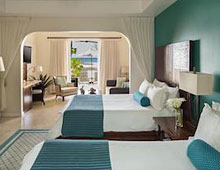 Hotel
Hotel 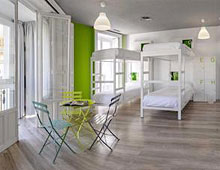 Budget accommodations
 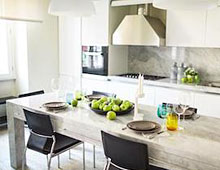 Apartments
  Family Hotel
 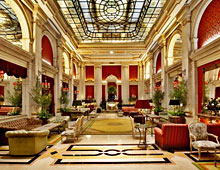 Luxury Hotel