Vila Iris
Chişinău - Dacia Boulevard 49/10
Book now
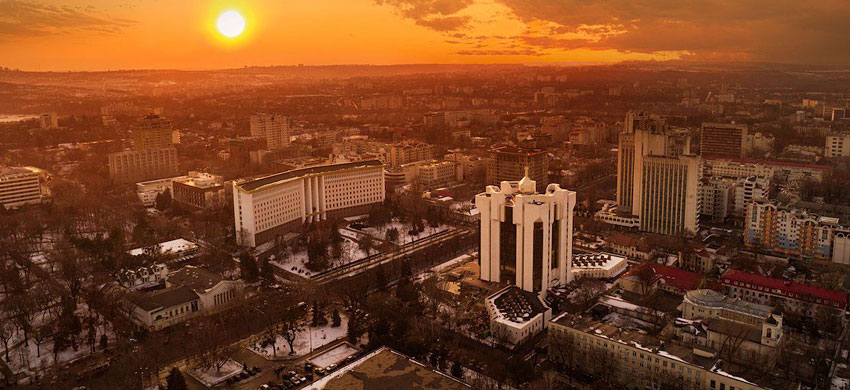
Chișinău is the capital of the Republic of Moldova, and by far the country’s largest city, with over half a million inhabitants. It is the nerve centre and economic hub of the country, as well as a major transport and industry junction.
Known as Kishinev among Russian-speaking Moldovan populations, Chișinău was founded in 1436, though it remained a small village of fewer than 7,000 inhabitants until the 19th century. Its development has therefore been very recent, and for this reason the city has no historic or ancient buildings.
For those arriving in Moldova by air, Chișinău is the first city you’ll visit, as it’s home to the international airport. But even if you decide to embark on a road trip through Moldova, we recommend spending a couple of days here to begin discovering the country from its capital and to connect with the local people.
Chișinău’s climate is characterised by hot summers and cold, windy winters. In winter, average temperatures are below freezing, though it’s rare for them to drop below -10°C. Snow is frequent and the days are short, making it far from ideal for visiting a city.
By contrast, in summer the maximum temperature is around 25°C, making it the best season to visit the city. The days are long and sunny, the parks are lush and full of people, and visitors flock to outdoor restaurants and cafés.
The intermediate seasons, autumn and spring, are also good for visiting Chișinău, particularly in May and September, when you’ll enjoy long days, pleasant weather and plenty of activity on the streets.
Most of Chișinău’s tourist attractions are located in the centre or in the immediate surroundings. Here are the best ones, so you won’t miss anything in this city.
One of Chișinău’s symbols is its triumphal arch, or Arcul de Triumf in the local language. It’s an arch built in white stone, 10 metres wide and 13 metres high, constructed in the mid-1800s in front of the government palace. At the top of the arch is a clock, another iconic feature of the city that illuminates during the night, whilst inside sits an enormous bell weighing 6.4 tonnes, made from metal obtained from the melting down of Turkish cannons captured during the Russo-Turkish War of 1828.
Chișinău’s triumphal arch has a square base and two storeys, the upper one decorated in classical style. In 1945, a series of plaques bearing the names of Soviet Army soldiers and Moldovan citizens who fought together in Bessarabia during the Second World War and received the honour of “Hero of the Soviet Union” were installed on the arch’s walls. These plaques were removed in 1991 after Moldova became independent.
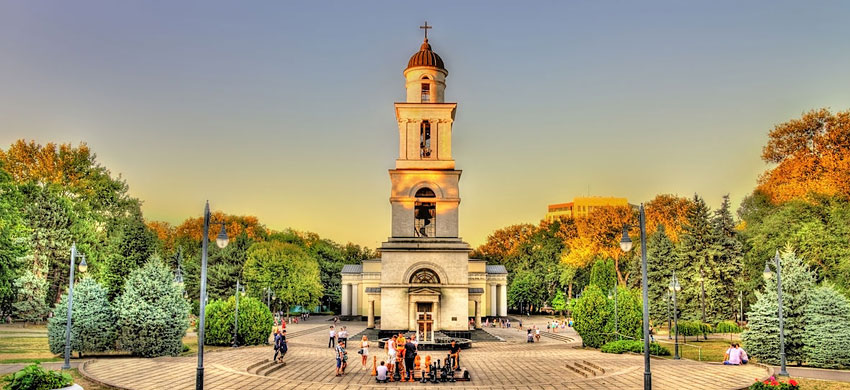
Right opposite the triumphal arch stands the Catedrala Mitropolitană Nașterea Domnului, Chișinău’s principal Moldovan Orthodox cathedral. It was built in 1836 to a design by architect Abram Melnikov and is an impressive white neoclassical building with a zinc black dome and an entrance behind six splendid Greek-inspired columns.
The cathedral was bombed during the Second World War, and the bell tower was destroyed by the Communists in 1962. Following these destructions, the church you see today bears little resemblance to the original, whilst the new bell tower was only rebuilt in 1997. During the Soviet period, the interior was completely bare, but today you can admire walls painted in pure Orthodox style.
The National Museum of the History of Moldova, or Muzeul Național de Istorie a Moldovei in the local language, is located in central Chișinău and houses over 263,000 objects illustrating the country’s history. It was founded in 1983 in the building that once housed the regional school, and contains archaeological, late-antique and military artefacts.
In front of the museum’s entrance stands a bronze statue of the Capitoline Wolf, a copy of the one housed in the Capitoline Museums in Rome, donated by Italy in the early 20th century when Chișinău was still part of Romania, along with four other copies installed in Bucharest, Cluj-Napoca, Targu Mures and Timisoara.
The Ștefan cel Mare park, known as Pushkin Park during the Soviet period, is Chișinău’s main public park, located in the city centre. It’s Moldova’s oldest park and covers approximately 7 hectares. Its nickname of the “lovers’ park” comes from the fact that local young couples often choose it as a meeting point or for their romantic strolls.
Within the park there are 50 species of trees, some centuries old, dating back to 1818, the year the park was established. You can walk along tree-lined paths, where you’ll find stalls, children’s play areas and outdoor bars. Particularly interesting is the Aleea Clasicilor, or the “avenue of the classics“, a walkway flanked on both sides by statues depicting figures who shaped Moldova’s history, both politically and literarily.
At the edge of the park stands the statue of Ștefan cel Mare, a monument to the great prince who shaped Moldova’s history in the late 1400s. The bronze and stone statue was inaugurated in 1928 and depicts him with his left arm raised, holding a cross.
Chișinău’s central market, Piata Centrala, is one of the most interesting places to visit in the city. Located just south of Stefan Cel Mare Avenue, it’s a covered market that extends beyond its original perimeter in a succession of stalls where you can buy practically anything, from household items to clothes, medicines to children’s toys, and of course a wide variety of street food, vegetables, fruit, meat and fish. It’s a colourful market and an interesting place to shop, though it’s worth noting that any branded products on sale are clearly counterfeits.
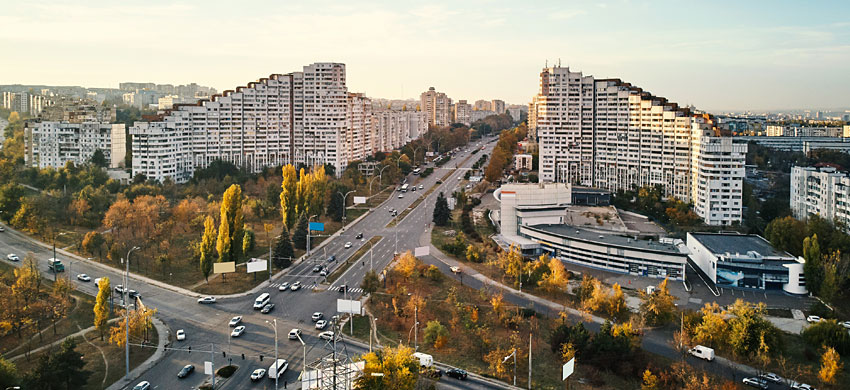
We conclude our list of things to see in the city with one of Chișinău’s symbols, the enormous residential complex Porțile orașului, also known in English as Gates of City or Gates of Chișinău. It’s certainly not a monument or a beautiful work of art or building, but its impact is truly incredible. It’s located as you enter the city (hence the name) coming from the airport, at the start of Bulevardul Dacia avenue, and is a complex made up of two symmetrical buildings with a triangular shape, opening symmetrically perpendicular to the avenue that separates them.
According to the architects, the Gates of Chișinău were intended to represent Moldova’s progress, to the extent that they are also depicted on a series of stamps issued by the country’s postal service in the early 2000s. They are two enormous concrete buildings, up to 24 storeys high with a height of 70 metres. The architects responsible for the work were Iulia Borisovna Skvorțova, A. Markovici and Anatol Spasov, who followed the design of architect Iuri Tumanean.
In the following map you can see the location of the main places of interest mentioned in this article.
Reaching Chișinău from abroad is very easy thanks to plenty of flight connections, operated by both the flag carrier Air Moldova and several low-cost airlines. You can fly from various international airports at reasonably affordable fares.
Some coach companies also operate overland connections to Chișinău, convenient for carrying lots of luggage, but decidedly inconvenient in terms of travel time. From major cities it’s several thousand kilometres, taking almost 2 days or more, lengthened considerably by intermediate stops and border crossings.
If you’re already in Romania, you can reach Chișinău by car, though distances are certainly not short:
To these distances you should add the border crossing waiting time, which varies from 20 minutes to several hours, depending on traffic. There are two convenient border crossings for reaching Chișinău: Sculeni in the north and Albita in the south. Crossing at Sculeni is convenient if you’re arriving from Iași or Cluj-Napoca, whilst from other cities in central and southern Romania you pass through Albita.
Chișinău is a large city but it’s recommended that you stay near the centre, in the area around Stefan Cel Mare Avenue, so you can visit all the attractions on foot or by bus at most. There are several good-quality hotels that are very affordable, and likewise there are some 4 or 5-star hotels belonging to major international chains, more expensive but with better services.
Alongside hotels, there are a number of apartments and guesthouses, run by local families, ideal if you want to immerse yourself fully in the city’s daily life. These establishments often offer breakfast and dinner, giving you the opportunity to eat with the family at very reasonable cost.
In Chișinău you can get around using trolleybuses, buses or marshrutkas (Soviet-style minibuses), all very efficient and connecting different parts of the city, most passing through key points such as Stefan cel Mare Avenue and Bulevardul Dacia. For more information on prices, routes and up-to-date timetables we recommend visiting the easyway.md website, which also allows you to view individual route maps.
Of course, taxis are also available, equally affordable, but it’s best to negotiate the price upfront to avoid any unpleasant surprises.
What's the weather at Chișinău? Below are the temperatures and the weather forecast at Chișinău for the next few days.
 Hotel
Hotel 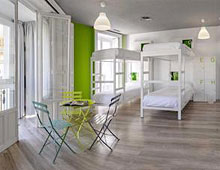 Budget accommodations
 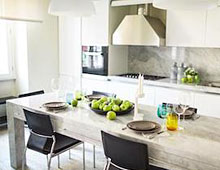 Apartments
  Family Hotel
 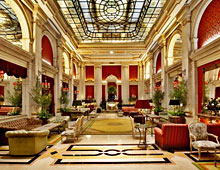 Luxury Hotel