UNESCO World Heritage Sites in Romania
Romania is a nation rich in monuments and cities designated by UNESCO as World Heritage Sites: a remarkable 31 in total. Let's discover which ones they are and where they're located.
Romania boasts no fewer than 31 sites declared UNESCO World Heritage Sites. The list includes historical, architectural and artistic treasures, such as painted monasteries and numerous castles, but also enchanting natural and landscape locations like the Danube Delta, one of the Earth’s most precious natural reserves.The medieval historic centre of Sighisoara, the Saxon fortified churches and the wooden churches of Maramures are also inscribed on the UNESCO list. If you have the opportunity, explore these fascinating places to immerse yourself completely in local traditions and admire timeless monuments.
The wooden churches of Maramures
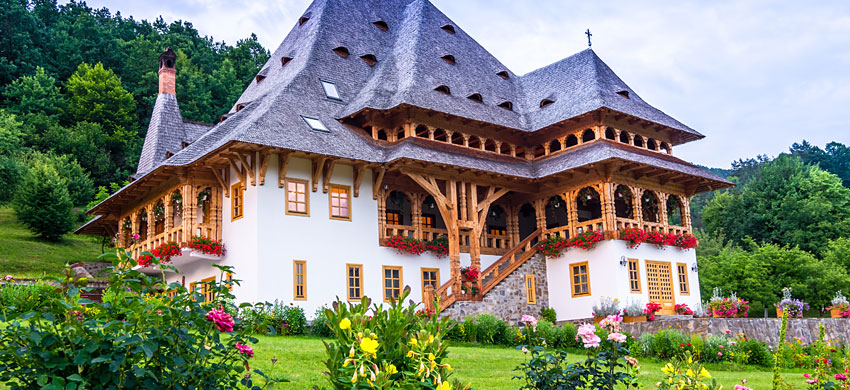
In the Maramures region, there are 7 UNESCO sites, churches built from wood using interlocking joints—that is, without the use of other materials, such as nails.
- Barsana: built on a regular plan in 1720 and dedicated to the Virgin Mary;
- Budesti-Josani: erected in 1642 and dedicated to Saint Nicholas, it is decorated with wall paintings from 1762;
- Desesti: built on a church from 1360, it boasts beautiful interior paintings from the late eighteenth century;
- Ieud: built in 1717 and dedicated to the Birth of the Virgin Mary;
- Sisesti, near the village of Plopis: the church dedicated to the Holy Archangels is considered the most beautiful of the Maramures churches;
- Poienile Izei: built in 1604, it houses frescoes from 1794;
- The church of Rogoz village, on the banks of the Lapus river: built in 1663 and dedicated to the Archangels, it was reconstructed in 1717 after a Tartar raid;
- The church of Surdesti village: built from oak wood on a stone foundation in 1767. It boasts one of the tallest towers in Maramures.
The monasteries of Moldavia
The painted monasteries of Moldavia and Bucovina are rich in magnificent and ancient frescoes often compared to great masterpieces of art.
- Voronet: a monastery from 1488 dedicated to Saint George, it boasts magnificent frescoes, including The Last Judgment, which has earned it the reputation of the “Sistine Chapel of the Orient”;
- Humor: built in 1530 and characterised by brick-red frescoes;
- Moldovita: built by Prince Petru Rares in 1532, it is famous for its fresco ‘The Siege of Constantinople’;
- Probota monastery: a classic example of Moldavian Christian architecture;
- The church of Patrauti: famous for its fresco “the procession of the Holy Cross”, an expression of Romanian-Christian anti-Ottoman thought;
- Arbore: the monastery was built in 1503 and is dedicated to the Beheading of Saint John the Baptist;
- The Church of Saint George in Suceava: constructed between 1514 and 1522, it preserves only a few fragments of the original frescoes.
The UNESCO sites of Transylvania
Nestled in nature are the famous medieval fortresses of Transylvania.
- Sighisoara: one of Romania’s most evocative medieval towns, it boasts massive fortification walls, towers and a historic centre full of narrow alleyways to lose yourself in. Also worth seeing is the birthplace of Count Dracula;
- The fortified church of Biertan, particularly its sacristy portal;
- Calnic, a fortress dating from the twelfth century;
- Darjiu, a fortress that houses wall paintings of considerable artistic interest;
- Prejmer, a majestic stronghold with an evangelical church in Gothic style from 1250;
- The evangelical fortified church of Saschiz, built between 1493 and 1496;
- The sixteenth-century town of Viscri, with double fortification walls and an evangelical church in Gothic style;
- The Church of Saint Peter in Valea Viilor from the twelfth century, resembling a defensive tower.
Other UNESCO World Heritage Sites
- The Dacian fortresses of the Orastie Mountains: at the sites of Blidaru, Capalna, Costesti, Lucani, Piatra Rosie and Sarmizegetusa Regia, located in the Orastie Mountains, are the fortresses of the Dacians, built between the first century BC and the first century AD;
- Horezu monastery, in Wallachia, is a medieval monastic complex built in 1693. In addition to the church there are a chapel, a refectory, two hermitages and a bell tower;
- The Danube Delta on the Black Sea is an earthly paradise, a natural habitat for numerous species of plants, fish and mammals.
Plan your visit in Romania in minutes!
 Hotel
Hotel  Budget accommodations
  Apartments
  Family Hotel
  Luxury Hotel