10-Day Romania Itinerary
A detailed 10-day itinerary in Romania, leaving nothing to chance and visiting this country's main attractions without missing anything.
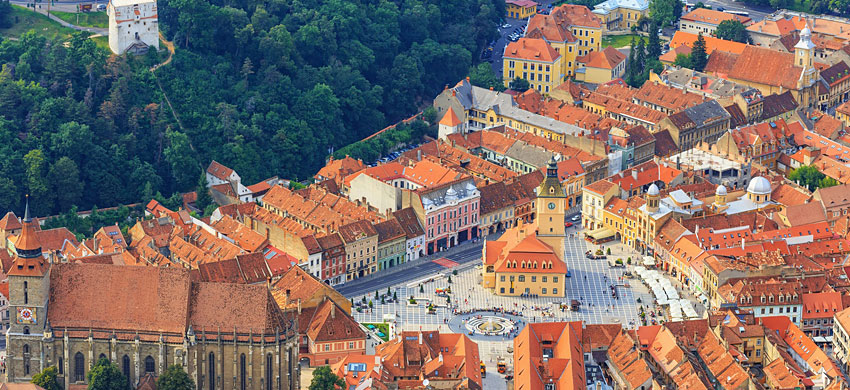
Romania is a destination capable of impressing and surprising from every angle. It remains largely undiscovered by mass tourism, though recent figures show rapid growth in visitor numbers. Thanks primarily to EU funding following Romania’s accession to the European Union in 2007, infrastructure has improved significantly, with the construction of numerous motorways and the surfacing of virtually all main roads.
Today, travelling in Romania is easier than ever, thanks also to numerous flight connections between the UK and the country’s airports. It’s therefore straightforward to organise a tour of Romania, taking in cities and mountains, Alpine valleys and medieval villages, discovering this corner of Europe stage by stage.
Below you’ll find all the information you need to plan a trip to Romania independently, how to get around, advice on the best time to visit, an idea of costs and above all the attractions not to miss, with recommended itineraries and useful tips to ensure you don’t miss anything of this land that you’ll discover is truly special.
Getting around Romania is straightforward: in Bucharest you can move about by bus or metro, whilst in smaller towns you can easily walk. Between cities, the best option is obviously to hire a car, as public transport, whilst certainly a viable option, is not as developed as in other parts of Europe.
There are buses that do most of the work and connect practically all cities in the country, whilst trains are often slow and delayed. Any form of public transport in Romania, however, has the major advantage of being decidedly economical. That said, relying on a rental car allows you to optimise your time and movements, and above all gives you maximum freedom in planning your itinerary without being subject to public transport schedules and their limitations.
Romania is a destination worth visiting at any time of year, but summer is without doubt the best: days are long and sunny, warm but never humid, valleys and mountain passes are entirely accessible, and it’s always possible to extend your tour to the Black Sea for a few days of beach relaxation.
Of course, it’s possible to visit Romania in winter too, perhaps limiting yourself to Bucharest and cities reachable from the capital via motorway. During this period the Transfagarasan Road is closed, and coastal towns are quiet and lifeless, awaiting the summer tourism rush. Moreover, days are short and very cold, but winter’s charm is unique, and if you love this season you’ll certainly find something in Romania worth exploring.
It goes without saying that spring and autumn are also excellent times to visit Romania, particularly in May and September, when temperatures are pleasant and days are long.
Romania is a country with an area slightly smaller than the UK, so it’s impossible to visit it all in a week, or worse, in a weekend. But limiting yourself to the main destinations, you could say that two weeks are sufficient to get an idea of the country and its strengths. Naturally, even with a week at your disposal it’s possible to undertake a nice trip, visiting for example Bucharest and spending a few days in Transylvania.
To make the most of your available time, given the abundance of flight connections between the UK and Romania, it’s possible to plan a linear itinerary rather than a circular one, arriving in Bucharest and departing from Cluj-Napoca or Timisoara, two other main hubs with direct flights to and from the UK. It’s a slightly more expensive solution, as you’ll need to add one-way car rental to your holiday costs, but the price will be more than offset by the extra time you’ll have to explore the country.
To start a tour of Romania we recommend Bucharest: the capital is also the country’s largest city, and it’s perfect for adjusting to its rhythms. It’s also the one with the international airport best connected to the UK. Alternatively, you can start a Romanian tour from Cluj-Napoca or Timisoara, cities with other international airports well connected to the UK by direct and budget flights.
Visiting Romania is extremely economical by Western standards, both in terms of accommodation and living expenses, not to mention that flights are operated almost entirely by budget airlines. Attractions are almost all free, and where there’s an entrance fee it’s still very economical. Paradoxically, the expense that will have the greatest impact will be the car, between rental and petrol.
As for the motorway, a vignette payment system is in place, purchasable online on the official website or on the spot, with prices varying according to the length of your stay in Romania and the category of vehicle you’re using.
To understand which places to visit during a tour of Romania it’s important to understand what type of tour to do. For example, if you decide to visit the Black Sea coast you might want to visit villages on the edges of the Danube Delta and then head south visiting Mamaia, Constanta, Mangalia and Vama Veche.
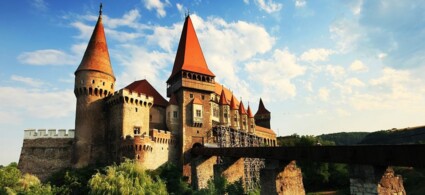
Alternatively, if you want to base your trip on Transylvania, you could plan to set off on the road from Bucharest to visit Brasov, Sighisoara and Cluj-Napoca, making appropriate stops at magnificent castles.
If instead you want to see a bit of everything, you could set off from Bucharest and visit in order Sibiu, Alba Iulia, Maramures, Bucovina, Sighisoara, Sinaia, Tulcea, Constanta and then return to Bucharest, for a total distance of around 2,500 kilometres. As already mentioned, the pace of travel should follow the days available: ideally for a tour like this you’d want at least 2 weeks.
If you don’t know where to start to create your own personal tour of Romania, here are 4 suggestions to do by car, designed for those seeking only the best of this country.
A complete itinerary to discover this country and everything it has to offer, condensed into 10 days of immersion to ensure you don’t miss anything.
This itinerary is circular, departing and returning to Bucharest. You start by visiting the capital and its palaces, then head towards the Curtea de Arges and Cozia monasteries. After a well-deserved stop in Sibiu, you visit Sighisoara and Bistrita, before discovering the painted monasteries of Sucevita, Moldovita and Voronet. The tour concludes with a visit to Brasov, Dracula’s Castle and Sinaia, returning to Bucharest to end your trip.
Read moreTransylvania is Romania’s most enchanting region, and this 10-day itinerary is designed to ensure you don’t miss anything. It’s a linear itinerary, departing from Bucharest and arriving at Cluj-Napoca.
You start by visiting the capital for a couple of days, then set off on the road heading north, passing through Sinaia, Peles Castle and Brasov. Continue on to Bran, where you’ll find Dracula’s Castle, and visit Sighisoara and Sibiu. Finally, the itinerary ends in Cluj-Napoca, where you can relax for a couple of days or make a detour to the Maramures region or to Bucovina to admire its splendid monasteries.
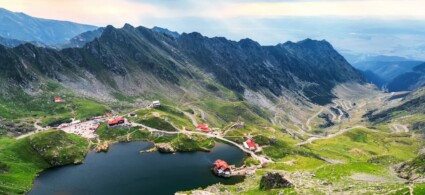
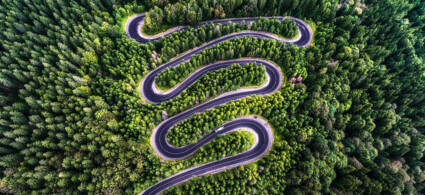
Read moreThe Transfagarasan Road has been judged by many industry experts as the most beautiful road in the world. Built by Ceausescu in the early 1970s, it connects Transylvania and Muntenia. Road trip enthusiasts would be willing to travel to Romania just to drive it, and with this itinerary you’ll explore it in its entirety.
Start from Bucharest and head north towards Pitesti. From there take the Transfagarasan at Bascov, and drive the whole length passing through Curtea de Arges arriving at Cartisoara. Enjoy the hairpin bends and altitudes, and admire the mountain peaks that surround you.
To return to the UK, you can choose to drive the Transfagarasan back to Bucharest or continue on to Sibiu and the Cluj-Napoca airport.
Read moreAn unusual itinerary, perfect for lovers of art and nature, which will lead you to discover wonders still unknown to mass tourism. To undertake this itinerary we recommend you make use of the airports in Iasi, Bacau or Suceava: it’s here that you’ll spend a night or two, visiting the monasteries of Voronet, Humor, Moldovita and Sucevita.
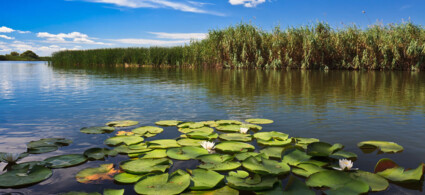
Then head towards Tulcea, the gateway to the Danube Delta: here you can travel along the river by boat at sunset, to admire spectacular scenery, or dedicate yourself to birdwatching. The natural history museum in Tulcea is also very interesting.
Here are some practical information that will be useful for planning your tour of Romania.
In Bucharest and in cities, shops are usually open from 9:00 to 18:00 during the week, and Saturday mornings, remaining closed on Sundays. The exception is shopping centres, open every day from 9 in the morning to 20:00.
As for restaurants, they’re open all day from morning until late evening, usually until 23:00, whilst nightclubs tend to stay open until 3 at night. In smaller towns and villages it’s possible that restaurants, bars and pubs may follow different hours.
Banks are usually open from 9:00 to 17:00 Monday to Friday, and Saturday mornings, whilst museums are usually closed on Mondays. Peles and Bran castles, among the country’s most famous, are open every day from 9 to 17, though check updated opening times as they may stay open longer in summer. Also check the last admission time, which can be up to an hour before actual closing.
If you decide to set off on the road to explore Romania, you’ll need to think about fuel supplies. Staying around Bucharest or other major cities in the country you won’t have trouble finding a pump. Similarly, travelling between cities on the motorway there are several service stations where you can refuel.
However, if you have a long journey in mind in a mountainous area or along secondary roads, remember to fill up in advance, to avoid unpleasant consequences, as in the remoter parts of the country, petrol stations are very scarce or even non-existent.
Driving in Romania is not as dangerous as people think. The driving behaviour of locals has aligned with Western standards, even in cities. Driving in Bucharest is no different from driving in London, Manchester or Birmingham, traffic included! In cities the speed limit is 50 km/h, whilst on motorways you can travel up to 130 km/h.
The motorways are well constructed and many are recently built, having been completed from 2007 onwards following Romania’s entry into the European Union. But in mountainous and rural areas things change: there are still some unpaved roads or roads in poor condition. Take care therefore when driving a rental car, as often the insurance doesn’t cover damage from unpaved or gravel roads. Also watch out for animals crossing at night, especially stray dogs.
 Hotel
Hotel  Budget accommodations
  Apartments
  Family Hotel
  Luxury Hotel