Hotel Dumbrava
Bacău - Str. Dumbrava Rosie 2
Book now
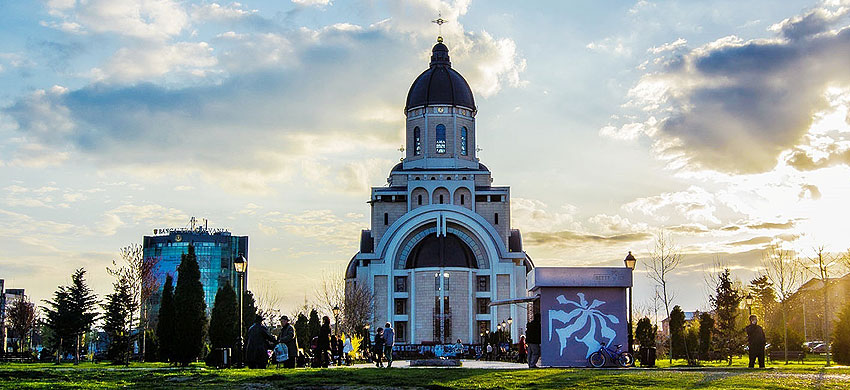
Bacău is a city of approximately 200,000 inhabitants located 300 kilometres north of Bucharest, in the historic region of Romanian Moldavia, at the foot of the Carpathian Mountains and on the edge of Transylvania, from which it is separated by the Ghimeș-Palanca pass. The city was founded in 1408, although the area had been inhabited since the sixth century.
Although not one of Romania’s main tourist destinations, Bacău is a city well worth visiting, both because it is the ideal base for admiring the magnificent surroundings and because it is home to a small international airport with excellent connections across Europe. Bacău therefore becomes the ideal gateway to northern Romania: take time to explore it and then set off on a tour of the surrounding area – you certainly won’t regret it.
Bacău is a destination worth exploring, and even though it may not have the same number of attractions as other more renowned Romanian cities, it’s worth visiting simply to get a close-up view of how local people go about their daily lives. Here are the best things to see in the city, so you don’t miss a thing.
The Biserica Precista church is Bacău’s oldest, built over 500 years ago at the behest of Stephen the Great and his son Alexander, next to what was once their royal court. It is an Orthodox church built with meticulous attention to detail, in full medieval Moldavian style, constructed from stone and brick, and richly decorated inside and out. Inside you can admire a series of paintings dating from the eighteenth century.
The astronomical observatory in Bacău, named after Victor Anestin, is a real gem. It is housed in a restored old water tower, and inside there are numerous attractions for both adults and children, all related to the sky and space above us, including a 4K planetarium and a large telescope that allows you to see the moon even in broad daylight. From the roof of the building you can also enjoy a splendid view of Bacău.
Located along Stefan cel Mare Street, Gepex Park is a meeting point for locals and a real green lung for the city. Here you can enjoy outdoor sports or relax for a picnic. In winter there is an ice skating rink, while in summer you can take advantage of a lovely swimming pool. There are bars and restaurants, as well as entertainment areas with table tennis and five-a-side football pitches.
The Monumentul Eroilor de Pe Muntele Magura is located in Târgu Ocna, a few kilometres south of Bacău. It is reached on foot after a walk through the woods, and from here you can enjoy a splendid view of the valley below. It is a monument dedicated to those who died in the First World War during the battles fought in this area, and its construction dates back to 1925. Inside there is also a three-storey museum, open in the mornings from May to September.
The third largest cathedral in all of Romania is located right here in Bacău, and it is one of the city’s most recent monuments. Its construction was completed only in 2018, covering an area of over 1,700 square metres. Its height of 70 metres and width of 38 metres make it truly imposing. The bell tower houses 18 bells, weighing up to 4.5 tonnes, and they are synchronised by special computers so that they can reproduce over 1,000 different pieces.
The area around Bacău is ideal for mountain lovers and trekking enthusiasts. There are several walking trails, particularly near the Slanic Moldova Park. In addition to the aforementioned path that leads to the Monument to the Heroes of Magura Mountain, a very popular trail is the 300 De Scari, meaning “the 300 steps”, which is suitable for everyone although in some sections the path is quite steep. It winds through the forest, and once you reach the top, after about 2 hours, you can enjoy an exceptional panorama of the valley below.
Approximately 70 kilometres west of Bacău is Valea Uzului Lake, in the vicinity of the village of Darmănești. It is an artificial lake created in the 1970s, with a dam on the Uz River. The lake is surrounded by forests, and a walk around the area offers truly spectacular views.
Bacău is a fairly compact city, so it’s worth staying in the centre, as all the attractions are within walking distance. Accommodation is very affordable, and largely consists of apartments. As often happens in Romania, upmarket facilities are very competitively priced compared to what we are used to elsewhere, so if you want to treat yourself, you can do so without breaking the bank.
The city of Bacău is served by an international airport, named after the composer George Enescu. It is a small airport but is a hub for the low-cost airline Blue Air, which operates numerous direct flights to and from across Europe, making it very easy to reach.
If you are already in Romania, the city is approximately 300 kilometres north of Bucharest, accessible via the DN2 road. From Suceava or Iași you should instead head south along the E85, whilst the E574 European road links Bacău with Transylvania and Brașov.
Bacău also has a railway station, one of the busiest in Romania, which connects the city with numerous Romanian cities and also with Ukraine, Russia and Bulgaria.
What's the weather at Bacău? Below are the temperatures and the weather forecast at Bacău for the next few days.

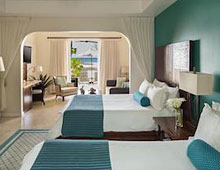 Hotel
Hotel 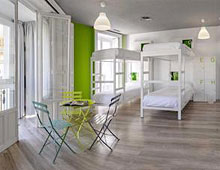 Budget accommodations
 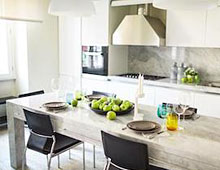 Apartments
  Family Hotel
 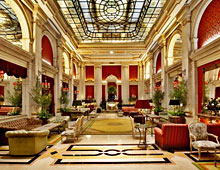 Luxury Hotel