Hotel Rapsodia City Center
Botoşani - 4 Cuza Voda Str.
Book now
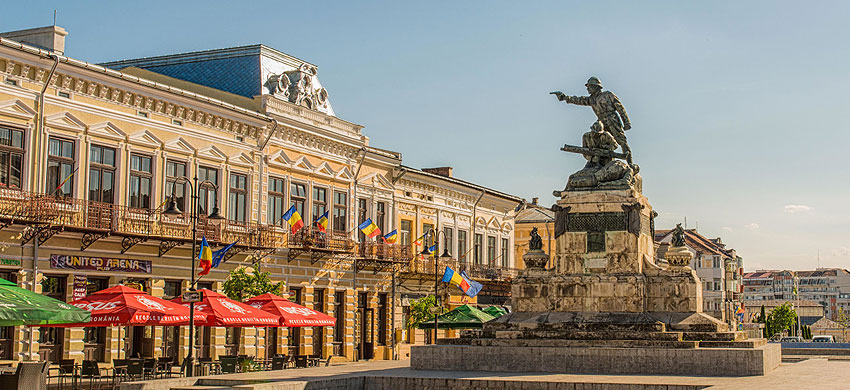
Botoșani is a city in Romania located in the historic region of Moldavia, at the far north of the country. With a population of just over 100,000 inhabitants, it is nonetheless a particularly significant place for the nation: it is here that numerous prominent figures who shaped Romanian history were born, including the poet and journalist Mihai Eminescu, the politician and literary critic Nicolae Iorga, and the biologist Grigore Antipa, who was among the first to study the rich fauna of the Danube Delta.
Life in Botoșani unfolds at a leisurely pace, but culture thrives here: the city is home to a series of fascinating museums, art galleries, theatres, and hosts an orchestra, ballet company and opera house. From a tourism perspective, the city is ripe for discovery, and with budget airlines now operating at nearby Suceava airport, just 30 kilometres away, it is expected to become an increasingly popular destination for travellers choosing Romania for their holidays in the coming years.
Despite being a small town, Botoșani proves to be a fascinating place to visit, thanks to its numerous museums, churches and a range of unmissable attractions. Here are the best 5 things to see in Botoșani before heading off on a road trip around the surrounding area.
The ethnographic museum of Botoșani serves as the perfect introduction to the city. It showcases its entire history, beginning with the first rural civilisation. The museum’s growth has been remarkable – whilst it housed fewer than 800 pieces in the 1980s, just two decades later this had grown to almost 3,500. Most of the objects on display tell the city’s story from the 1800s onwards: you can admire religious relics, furniture, textiles and ceramics, offering a glimpse into how people lived during that era.
Moscovici House is a building constructed in the 1800s by Jewish banker Boris Moscovici, who gave it an eclectic style straddling Baroque and Palladian architecture. The building was later sold by the Moscovici family to the city’s chamber of commerce and subsequently served various purposes, from bookshop to offices. Since 2010, it has been included on the city’s list of historic monuments. Moscovici House is also open for internal visits, as three sections of the Botoșani county library, named after Mihai Eminescu, are housed on the ground floor.
This fascinating building was the home of Nicolae Iorga, one of the most prominent figures closely associated with Botoșani. Nicolae lived here with his family between 1876 and 1880, and today the house displays numerous personal belongings. On view are photographs of his family and Nicolae at different ages, as well as his honorary doctorates from some of Europe’s most prestigious universities, including the Sorbonne, Cambridge and the University of Rome.
Also on display is an extensive book collection, many of which were written by Nicolae Iorga himself, along with a collection of newspapers and journals that he personally edited and managed. Some rooms in the house recreate life in that era, giving visitors an insight into what life was like in Botoșani at the end of the 1800s.
The Popăuți Monastery is one of Botoșani’s finest monuments. It was built in 1496 by Prince Stephen the Great and is included on Romania’s list of historic monuments. Within the monastery’s courtyard are three distinct buildings: the Church of St Nicholas and the bell tower, both constructed in Moldavian style, and the new church, dedicated to the Virgin Mary, which replaced an old museum demolished in the late twentieth century.
The Church of St Nicholas is a stone building with walls over a metre thick, though its exterior features a red brick façade. The interior is ornate, with a series of frescoes dating to the fifteenth century, and the nave walls decorated with scenes from the Passion of Christ. The bell tower, meanwhile, stands 17 metres high and dates to the same period as the church. It is square in form, constructed of stone carved at the corners, and arranged over three storeys. On the third floor are 4 large openings facing the four cardinal directions.
Outside the church, archaeologists have discovered a necropolis where 25 bodies are buried on three levels.
The Mihai Eminescu Park is the city’s green lung. It was opened in 1869, and in its central area features an artificial lake crossed by two bridges, where in summer it is possible to hire rowing boats and pedal boats. Along the shaded tree-lined avenues are a series of statues depicting the main personalities associated with Botoșani. The park is well-maintained and is undoubtedly the best way to spend a few hours of relaxation and tranquillity without leaving the city.
Botoșani is situated in the heart of a plain, so trekking is not the first thing that comes to mind upon arriving in the city. However, some 150 kilometres to the west lie three parks in the heart of the Carpathian Mountains: the Maramureș natural park, Rodna National Park and Călimani National Park. Botoșani is well connected to the Carpathians via the DN29 and DN17 roads, making it an ideal base for magnificent mountain walks surrounded by nature.
Being a relatively young destination in tourism terms, accommodation options in Botoșani are limited. There are around 5-6 hotels to choose from, along with some apartments. The hotels are of excellent quality and prices are remarkably competitive. Considering that 4 of the city’s hotels are 4-star establishments and that the average price is 30-35 euros per night, staying in Botoșani could prove to be a pleasant surprise.
Before budget airlines began operating from Suceava airport, reaching Botoșani was decidedly complicated: its position at the far north of Romania, not far from the borders with Ukraine and Moldova, meant the town remained practically unknown to tourists. To give you an idea, Botoșani is almost 7 hours from Bucharest, the same from Constanța, 6 hours from Cluj-Napoca and 10 hours from Timișoara. With the exception of Suceava, the nearest city is Iași, which is nonetheless a 2-hour drive away; alternatively, Botoșani and Iași are also connected by a railway line that continues to and from Chișinău and Ukraine.
However, the distances are considerable but not prohibitive, and road conditions have improved significantly, especially since Romania’s accession to the EU. For this reason, even those already in the country can hire a car or take a coach and reach Botoșani in approximately a day’s travel. But with the international airport at Suceava now operational just 30 kilometres away, Botoșani has become extremely convenient to reach from the UK, with Wizz Air operating regular flights to and from various major European cities.
What's the weather at Botoșani? Below are the temperatures and the weather forecast at Botoșani for the next few days.
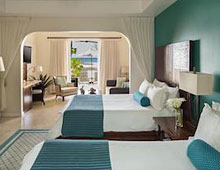 Hotel
Hotel 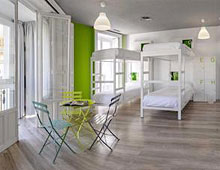 Budget accommodations
 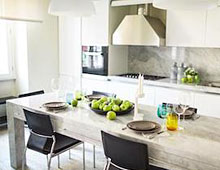 Apartments
  Family Hotel
 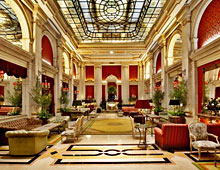 Luxury Hotel