MyContinental Suceava
Suceava - Str Mihai Viteazul 4-6
Book now
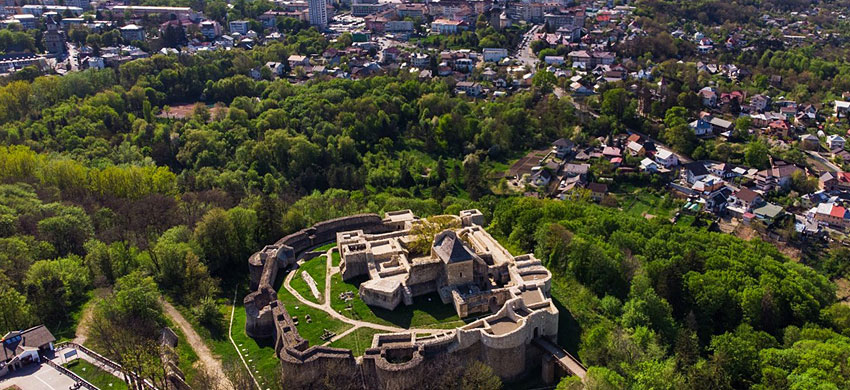
The city of Suceava, founded as a Dacian colony around 100 AD, sits along the banks of the river of the same name in north-eastern Romania and served as the capital of Moldavia until shortly after the conquest by Suleiman the Magnificent. Following its annexation into the Austro-Hungarian Empire, Suceava returned to Romanian rule at the end of the First World War.
The city boasts excellent tourist facilities, among the best in the country. Amongst the monuments most visited by tourists, somewhat hidden behind large concrete buildings, are the Zamca Monastery, the Church of St. John the Baptist, the Church of St. Demetrius, and the Museum of Traditional Art. Finally, Suceava serves as the ideal base for beginning the tour of the monasteries of southern Bucovina.
The Church of St. George is located within the New Monastery of St. John, or Mănăstirea Sfântul Ioan cel Nou in Romanian. The entire complex dates from the early 1500s and is part of the UNESCO World Heritage Sites list alongside eight other monasteries and churches in Moldavia.
The Church of St. George served as the metropolitan cathedral of Moldavia until 1677; subsequently, from 1991 to the present day, it has served as the cathedral of the Archdiocese of Suceava and Radauti. One of its distinctive features is that it is frescoed on the exterior as well, on its walls.
The oldest church in Suceava is the Biserica Sfântul Gheorghe Mirăuți, founded by Petru I Musat in 1375 and also dedicated to St. George. This may cause confusion with the Church of St. George described previously, which is located within the New Monastery of St. John.
The characteristic architectural elements of the Mirăuți church are the semicircular colonnades joined by arches and towers, and the presence of two rows of bricks inside, arranged in a sawtooth pattern.
The church was rebuilt several times throughout its history, and what we can admire today is one of the finest examples of Moldavian architecture, so much so that in 2013 the Romanian postal service honoured it by featuring it on a series of stamps. To visit it, simply head to the eastern part of Suceava along Mirautilor Street. On foot, it can be reached in about 10 minutes from the Casa de Cultura.
With its precious collection of traditional costumes and objects, the Muzeul Bucovinei (Bucovina Museum) is actually a complex of museums that extends throughout the entire region. They are independent in terms of programmes and events, but managed together by a single institution, which has its headquarters within the history museum, located in the centre of Suceava.
When visiting the history museum, you can admire, amongst other things, the reconstruction of the old throne room, which once stood within the fortress, where you can see fibreglass representations of Ștefan cel Mare, his third wife Maria Voichita and his son Bogdan III.
Another interesting institution within the Muzeul Bucovinei is the Muzeul Satului Bucovinean, an open-air museum that allows you to get a close look at the traditional cultural and artistic heritage of the Bucovina region. It is located in the eastern part of the city, not far from the fortress, and was founded in the 1970s. Visiting the Muzeul Satului Bucovinean will give you the sensation of being in an ancient Bucovina village, with traditional houses, mills, granaries and various objects from the surrounding localities and villages.
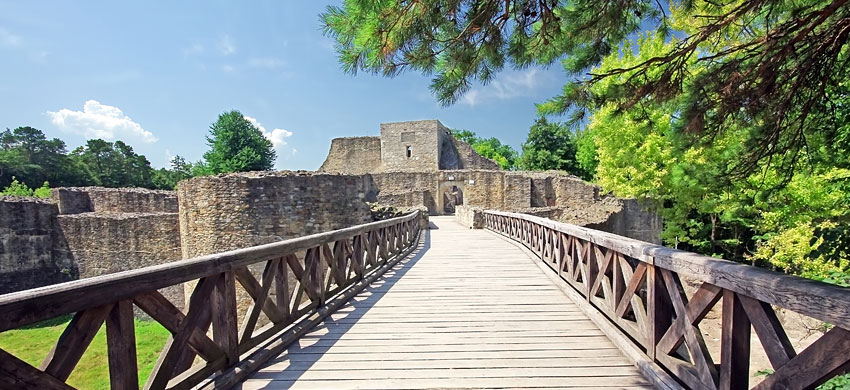
Built in the 14th century during the reign of Petru of Moldavia, also known as Petru Musat, this impressive fortress served as both a royal residence and a fortification against the Ottomans. Rectangular in shape, its sides measure 36 and 40 metres; originally, the fortifications were 10 metres high and 2 metres wide, and were later reinforced with defensive towers. Within it were soldiers’ quarters, the prince’s quarters, a chapel and various storerooms.
The Suceava Fortress today consists of two concentric citadels: the inner one is called Fortul Musatin, has a rectangular shape with an internal courtyard and corresponds to the original fortress. Later, in the second half of the 15th century, King Ștefan cel Mare expanded the structure by adding a second ring of defensive walls, which completely surround the original fortress.
Today, Suceava Fortress is one of the city’s symbols and one of its main tourist attractions. Since 2011 it has been used to host cultural events, such as the Bucovina Rock Castle music festival.
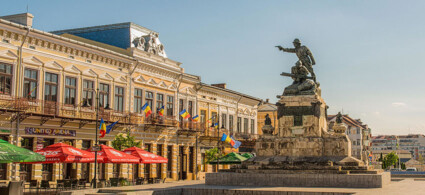
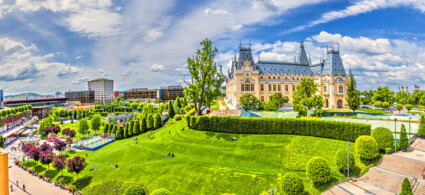
The Palatul Administrativ, or Administrative Palace of Suceava, is a historic building constructed in the early 1900s to serve as the city’s town hall. It was built to the design of Viennese architect Peter Paul Brang, who opted for the Baroque style. Today, the palace houses the prefecture and the Suceava County Council.
In the following map you can see the location of the main places of interest mentioned in this article.
Suceava is the ideal departure point for visiting the famous painted monasteries of Bucovina, veritable works of art inscribed by UNESCO on the list of World Heritage Sites. There are four particularly interesting monasteries to visit, all within easy reach of Suceava’s centre, which can be seen in a single day if you plan a circular route:
Suceava is a city of around 100,000 inhabitants and is not particularly large. We recommend staying in the centre, near Esplanada Centru square, on which the Casa de Cultura overlooks. Here you’ll find most of the shops and services such as supermarkets, pharmacies and banks, and at the same time you won’t have any trouble finding a restaurant or venue to spend an evening after dinner.
Bear in mind that all accommodation in Suceava is decidedly economical compared to Western European standards, and that the services provided are of a good level; therefore you can afford an excellent hotel at a fraction of what you might expect to pay. For those travelling on a tight budget, or those who want to fully experience the local atmosphere, we recommend staying at a guesthouse or apartment run by locals, who will help you with advice and suggestions for visiting the city and its surroundings.
Looking at the map of Romania, you might think that Suceava, in the far north-east of the country, is unreachable or nearly so. Nothing could be further from the truth: its small airport, named after the great king Ștefan cel Mare and opened to international traffic in 2005, is connected to the UK and Europe thanks to Wizz Air, which flies to and from several European cities. Therefore, in just over two hours of flight time you’ll arrive in this destination waiting to be discovered, with minimal effort and without breaking the bank, as ticket prices are often very affordable.
You could also consider reaching Suceava by road, but the distances will probably put you off: this involves 19 hours or more by private transport from major Western European cities, whilst using international coaches the times at least double, due to the numerous stops to pick up passengers along the route.
Finally, if you’re already in Romania and want to explore Suceava and its surroundings, due to its remote location it will take you a while to get there: roughly 7 hours from Bucharest, 5 and a half hours from Cluj-Napoca, over 9 hours from Timisoara and 7 and a half hours from Constanța.
What's the weather at Suceava? Below are the temperatures and the weather forecast at Suceava for the next few days.
 Hotel
Hotel  Budget accommodations
  Apartments
  Family Hotel
  Luxury Hotel