Vila Preciosa
Alba Iulia - str. Lucian Blaga Nr.10
Book now
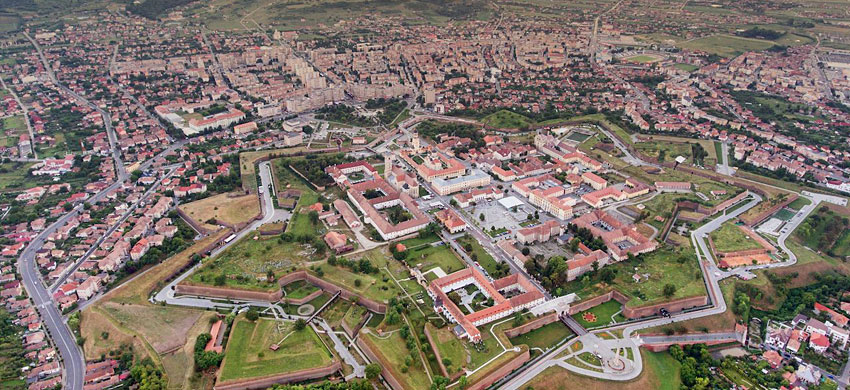
Between Cluj Napoca and Sibiu lies the charming town of Alba Iulia, famous for its magnificent historic centre. Declared capital of the independent Principality of Transylvania in 1641, it was known in ancient times by the name Apulum. Under Roman occupation, it was the largest economic and military centre of the colony and was rich in temples, baths, mosaics and amphitheatres.
Particularly impressive is the Alba Carolina Citadel, built between 1714 and 1739 according to a design by Italian military architect Giovanni Morando Visconti, the largest of its kind in southeastern Europe. The defensive walls, stretching 12 kilometres and composed of bricks and stones from the Roman site, and its 7 bastions with 6 monumental Baroque gates enclose a central fort. The first gate, at the eastern end of the fortress, is shaped like a triumphal arch and has 3 entrances.
Although it is a small town, Alba Iulia is very interesting to visit, with a range of religious buildings, palaces and museums to keep all its visitors engaged.
The Alba Iulia citadel, or Alba Carolina fortress, was built in the early 18th century on a hill adjacent to the town, a strategic defensive fortification built by the Habsburgs against the offensive of the Ottoman Empire.
It is the symbol of the town and has a star-shaped layout: the main body is surrounded by 7 bastions, one on each side, standing 12 metres high and stretching over 100 metres in length. Beyond the moat is a second defensive line, with further bastions, and even a third line on the outer perimeter.
At the heart of the fortress is the beautiful Piata Cetatii, or the “town square”, which overlooks two of the main city museums: the Mureul Unirii and the Museul Principia. Not far away stands the impressive equestrian statue of Mihai Viteazul, and the Orthodox Cathedral of the Reunification.
This beautiful cathedral is the most precious monument of medieval architecture in Transylvania. Dedicated to Saint Michael, it is Romania’s oldest cathedral, dating back to the late 11th century, though it was rebuilt two centuries later following the Mongol invasion of 1241. Within its walls are buried numerous personalities who shaped modern Romania, from John Hunyadi to Bishop Aron Marton. Particularly noteworthy is the clock tower, with its square floor plan, which stands beside the enormous arch that forms the church entrance.
The Museul Unirii, or National Union Museum, is one of Alba Iulia’s most important cultural centres. Housed within a palace dating from 1784, it comprises two buildings called Babylon, in 19th-century Romantic style, and the Union Hall, the place where the union of Transylvania with Romania was declared.
The national museum was inaugurated in 1888 under the direction of renowned archaeologist Adalbert Cserny; shortly after opening, it was enriched with a series of pieces showcasing Romania’s modern history. In 1992, the country’s ministry of culture took direct control of the museum, which now displays prehistoric and Roman archaeology, as well as ethnographic collections and local art and folklore.
It houses one of Romania’s most important libraries, with over 55,000 books, 1,200 manuscripts and 600 incunabula, and a permanent ethnographic exhibition that traces the history of Transylvania. The Union Museum also contains the 9th-century Codex Aureus, which holds the Gospels of Mark and Matthew and the Psalms of David.
One of the most important places of worship in all of Transylvania, this splendid Orthodox church was built to celebrate the coronation of the king in 1922, an event attended by over 60,000 people including local residents, peasants and parading soldiers. It features a bell tower over 50 metres high, beneath which stand the statues of King Ferdinand and Queen Marie.
The Prince’s Palace of Alba Iulia, located near the Roman Catholic Cathedral, dates back to the 15th century and was built as an episcopal residence. It was later converted into the prince’s residence, but was damaged by Turkish sieges in the mid-1600s, and subsequently became an ammunition store. Today, the Prince’s Palace of Alba Iulia is part of the Alba Carolina fortress, the true symbol of the town.
In the following map you can see the location of the main places of interest mentioned in this article.
For accommodation in Alba Iulia, it is advisable to stay around the citadel or even within it, although there are not many facilities. Outside the walls, however, you can find excellent hotels at reasonable prices and a range of apartments and guest houses where you can stay comfortably at truly budget-friendly rates. We recommend not venturing too far from the citadel, as this is where all of the town’s tourist attractions are located.
Alba Iulia is located in the heart of Romania, roughly equidistant between Cluj-Napoca and Timisoara. It is about 2 hours’ drive from either city, and the journey is pleasant and straightforward. If you’re in Bucharest, visiting Alba Iulia requires a journey of approximately 5 hours by car, covering a distance of over 350 kilometres.
The town can also be reached by public transport, though it’s not straightforward: there is a small railway station and it is possible to arrive by train, though one or more changes are often necessary.
From across Europe, you can reach Alba Iulia by car, with a journey of over 1,500 kilometres and 15 hours from various starting points, or by coach, using the numerous coach companies that operate routes to Romania. Regarding air travel, the town does not have its own airport, but you can land at Cluj-Napoca, Timisoara or Sibiu and then complete your journey by coach or taxi.
What's the weather at Alba Iulia? Below are the temperatures and the weather forecast at Alba Iulia for the next few days.
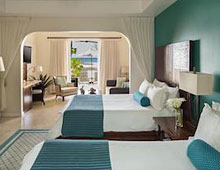 Hotel
Hotel 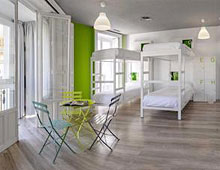 Budget accommodations
 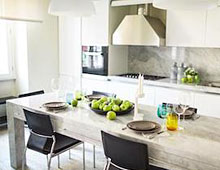 Apartments
  Family Hotel
  Luxury Hotel