Bestseller
Bucharest: Dracula's Castle, Peleș Castle & Brașov Day Trip
From 31,00 €
Buy the ticket
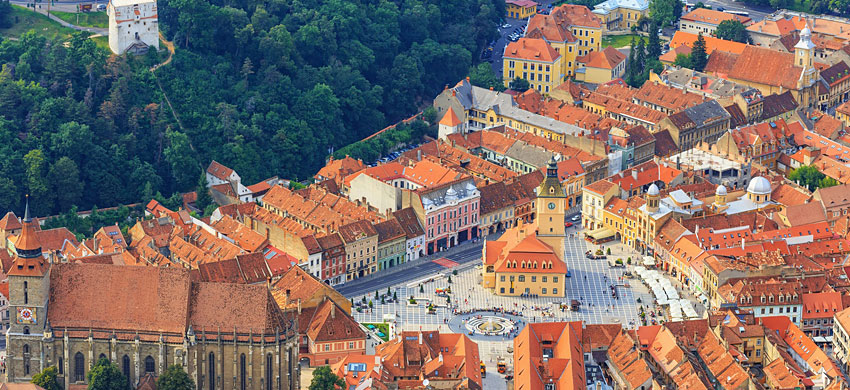
Fascinating and somewhat bohemian, Brașov is Transylvania’s principal city in terms of cultural and commercial importance and lies almost at the heart of Romania, 170 kilometres from Bucharest. Founded by the Teutonic Knights in 1211 and fortified by the Saxons, the city is a maze of winding streets, baroque facades and gothic spires.
Brașov is also an excellent base for exploring the magnificent surroundings: 15 kilometres southwest of Brașov you’ll find Rasnov Fortress, 25 kilometres away lies Dracula’s Castle, 6 kilometres to the north stands the fortified church of Harman and, a short distance away, the fortified church of Prejmer. Despite the city’s development, Brașov remains immersed in nature, surrounded on three sides by the Carpathians, and the wonderful surrounding forests have been protected even during post-war industrialisation.
The picturesque medieval citadel is surrounded by walls built in the 15th century, 12 metres high, 3 kilometres long and featuring 7 bastions. Within them you’ll find the Black Church, Romania’s largest gothic church, Rope Street or Sforii, Europe’s narrowest street connecting Cerbului Street with Poarta Schei Street, St Nicholas Cathedral and the beautiful Town Council Square, or Piata Sfatului, surrounded by baroque structures and merchant houses with the city’s former administrative heart, now a History Museum, at its centre.
There are plenty of things to see in Brașov, but here are the best ones to make the most of your time in the city.
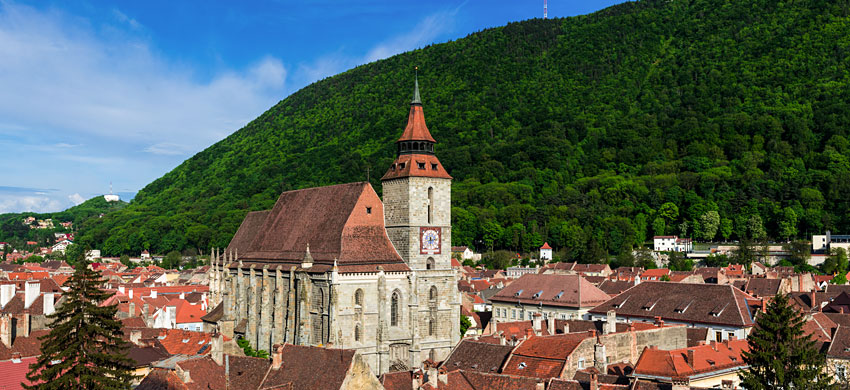
The Black Church of Brașov, or Biserica Neagra, is among Romania’s most famous gothic churches. The building, 90 metres long with a bell tower 65 metres high, stands in Town Council Square and was constructed between 1385 and 1477. In 1689 a great fire devastated much of the city and blackened the church’s walls, since then its name has been a memorial to those tragic events.
The interior of the church is in baroque style and is richly decorated: hexagonal stone columns divide the three naves and splendid balconies enrich the complex. The building also houses one of Europe’s largest collections of oriental carpets, comprising 119 Anatolian carpets donated to the church by German merchants between the 17th and 18th centuries in gratitude for surviving in those distant lands, and an enormous 1839 organ with over 4,000 pipes, used during summer for magnificent concerts. The church features 6 portals of different architectural styles, from gothic to renaissance.
A particular sculpture can be found on the northern buttress: it’s a representation of a child seemingly about to fall from the roof, linked to a legend dating back to the years of the Black Church’s construction.
The lovely Piata Sfatului, or “Town Council Square” in English, is the central square of the historic city centre. Overlooking it are 19th and 20th-century buildings, most of which are historical monuments. Among these, the most important by far is the Casa Sfatului, or “council house”, which gives the square its name. Dating from 1420, it now houses the history museum of Brașov county.
From the square, the narrow streets of the city centre fan out, including the picturesque Republicii Street, entirely pedestrianised, and nearby are some of Brașov’s main attractions, such as the Black Church, the Orthodox church, the Museum of Urban Civilisation and the lovely Hirschcher House.
Catherine’s Gate, or Poarta Ecaterinei in the local language, was built for defensive purposes in 1559 to replace the old gate destroyed years earlier by flooding. It takes its name from the ancient St Catherine’s Monastery that once stood here. The four turrets built on its top signify Brașov’s medieval judicial autonomy and its consequent right to apply capital punishment.
Today, Catherine’s Gate is the only one of the city’s ancient gates still standing, and legend has it that in the Middle Ages, when it was called the Wallachian Gate, it was the only entrance for inhabitants of the nearby village of Șcheii Brașovului, who were not permitted to use the other four gates because, during the Saxon rule from the 13th to 17th centuries, Romanians were forbidden from owning property within the city walls; they were therefore forced to settle in nearby Șcheii Brașovului and could only enter Brașov by paying a toll at Catherine’s Gate.
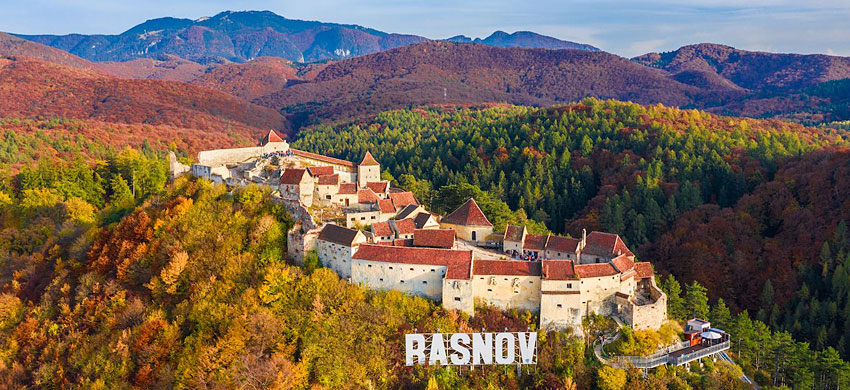
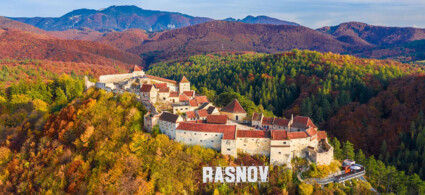
Not far from Brașov stands Rasnov Fortress, built by the Teutonic Knights on a rocky Carpathian hilltop along the commercial route connecting Transylvania and Wallachia. Rasnov, also called a peasant fortress, is one of Romania’s best-preserved fortified complexes.
This refuge town, probably built after the Mongol invasion of 1241, has a simple architectural style: the defensive wall is 5 metres high and up to one-and-a-half metres wide, the walls are irregular and follow the hilltop’s crest and, inside, there are 30 houses, a school and a chapel separated by narrow stone paths. The defensive system included nine towers, two bastions and a drawbridge.
Worth visiting is the Museum of Medieval Art with armour, antique furniture and some torture implements.
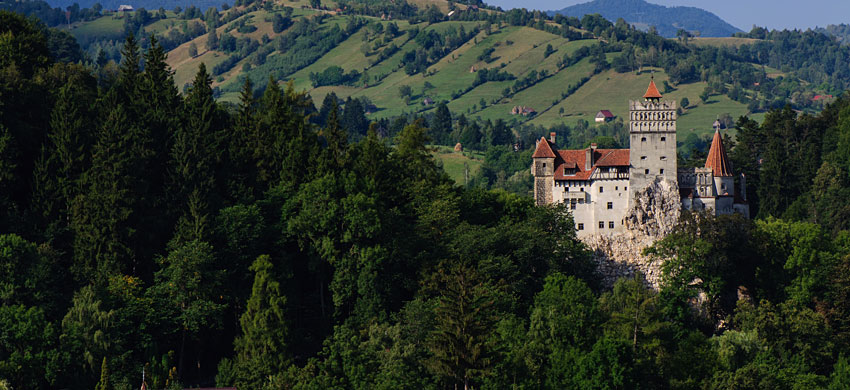
Bran Castle is the most obvious destination for those visiting the Brașov area, but certainly the most unmissable. One of Transylvania’s symbolic monuments, and by extension of all Romania, this magnificent castle situated in the town of Bran, 25 kilometres southwest of Brașov, is the place where Bram Stoker is said to have set his novel Dracula. For this reason, for many tourists and visitors this austere fortress is simply known as “Dracula’s Castle”.
Today, Bran Castle houses a museum featuring works of art and furnishings collected by Queen Maria, and you can explore the interiors independently or as part of a guided tour.
In the following map you can see the location of the main places of interest mentioned in this article.
Close to Brașov’s ancient medieval historic centre, a new town has been developed, certainly less rich in monuments and tourist attractions, but more comprehensive in terms of services. Therefore, those opting for accommodation in the historic centre can choose to stay around Piata Sfatului, whilst those preferring modern-day Brașov should look for lodging near the large Piata Consiliul Europei, which represents the new town’s centre.
Being a highly tourist-oriented destination, Brașov certainly doesn’t lack accommodation options: ranging from excellent hotels to small guesthouses, including guest houses and apartments rented out to tourists by locals. Whatever your choice, rest assured that prices are considerably lower than those in other Western European cities, and that services generally maintain excellent standards.
Brașov has no airport of its own, but to reach it you can fly to nearby Sibiu airport, Targu Mures airport or especially Bucharest Otopeni airport, which is approximately two-and-a-half hours away by DN1 road heading north, passing through Ploiesti and Sinaia.
There are also numerous bus connections between Bucharest and Brașov, and if you choose to drive from the UK you should factor in quite a long journey: 24 hours from London, depending on route.
Bear in mind that you can also take advantage of the many international bus lines that connect the UK and Romania daily, though travel times are considerably longer due to the numerous stops made to pick up passengers along the route.
Finally, Brașov’s position, practically at Romania’s exact geographic centre, means it’s reachable in reasonable time from virtually any city in the country: besides the aforementioned two-and-a-half hours from Bucharest, it takes four-and-a-half hours from Constanța, 4 hours from Cluj-Napoca, 4 hours and 45 minutes from Timișoara and 5 hours from Iași.
What's the weather at Brașov? Below are the temperatures and the weather forecast at Brașov for the next few days.
 Hotel
Hotel 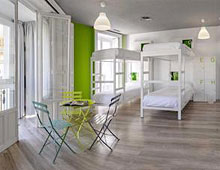 Budget accommodations
 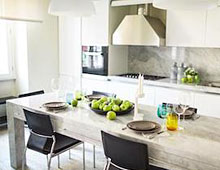 Apartments
  Family Hotel
 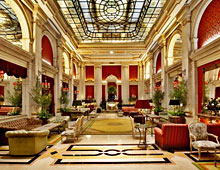 Luxury Hotel