The Museum of Oradea & Oradea Fortress Tour
History whispers to you at every turn in Oradea. Nowhere epitomizes this better than the (almost) indomitable Oradea Fortress, the centerpiece of this ancient Romanian city.
Buy now
From 19,99€ per person
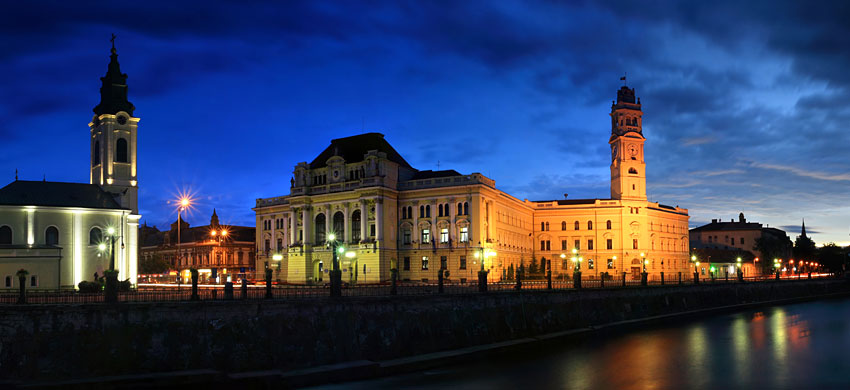
In the north-west of Romania, just a few kilometres from the Hungarian border, lies Oradea, a city in the valley of the Crișul Repede river. Oradea boasts a charming historic centre: two large squares, 1 December Square and Union Square, the Țării Crișurilor Museum and the Roman Catholic Cathedral, Romania’s largest Baroque church.
The town was destroyed by fire in 1836, and its picturesque appearance, characteristic of Art Nouveau and Austrian architectural style, or Secession, with pale pink, green, white and blue decorated facades, is the result of careful reconstruction.
Throughout its history, Oradea was the long-time residence of Hungarian King Matthias Corvinus and only after the Second World War did it become part of Romania once more. If you’re seeking some relaxation, head to the thermal springs and wellness centres at Băile Felix, just a few kilometres from the centre, where modern facilities and hot springs await, renowned for treating neurological problems, rheumatism and arthritis. Băile Felix is Romania’s largest thermal resort.
There are several things to see in Oradea that will interest all types of travellers, from art lovers to architecture enthusiasts. Here are the best attractions, so you won’t miss a single one.
The Oradea Fortress, or Cetatea Oradea in the local language, is one of the few fortresses still in use today, though obviously not for defensive purposes. Legend has it that this impressive fortress, with its double ring of star-shaped bastions with five points, is impossible to breach thanks to an extensive network of underground connections to the outside world. In the event of a siege, the water system would have been filled with thermal water from the Peta River.
The first traces of the Oradea Fortress date back to the 11th century, when King Ladislaus I built a fortified monastery on the land that, in the 14th century, first housed the impressive defensive building we can admire today in all its splendour, and which is undoubtedly one of the city’s absolute symbols. The Oradea Citadel today hosts numerous art exhibitions and craft fairs.
The Church of the Moon, or Biserica cu Luna, is also known as the Cathedral of the Assumption of the Virgin Mary, and is the city’s Orthodox cathedral. Its construction dates from the period between 1784 and 1790, and it takes its name from a mechanism unique in Europe: a huge astronomical clock positioned on the bell tower, which operates a sphere one metre in diameter, shaped like the moon, painted half in black and half in gold. This sphere moves in correspondence with the moon’s rotation around the earth, and shows the different lunar phases day by day.
Known as Catedrala romano-catolică Adormirea Maicii Domnului in Romanian, or informally as the Basilica Cathedral of St Mary, this beautiful Roman Catholic church was built between 1752 and 1780, based on a design by Italian architect Giovanni Battista Ricca, who drew inspiration from the Church of the Gesù in Rome. It is located in the square in front of the Bishop’s Palace.
The Bishop’s Palace, or Palatul Episcopale, was completed in 1770, and is an imposing U-shaped building featuring 3 floors, 100 frescoed rooms, 365 windows and a façade with Ionic capitals.
The palace has been home to a museum since 1971, called the Țării Crișurilor Museum, which houses over 400,000 pieces including historical, archaeological and ethnographic artefacts and artworks, all belonging to the county in which Oradea is located, Bihor County. Among all the museum’s sections, the ethnographic section showcases a remarkable display of Transylvanian folklore, with traditional costumes, reproductions of peasant houses, and splendid decorated Easter eggs.
The beautiful courtyard in front of the main entrance encloses a vast park, where you can admire marble and bronze statues representing the personalities who have made Oradea’s history, and nearby, the Catholic Cathedral of the Assumption.
In the following map you can see the location of the main places of interest mentioned in this article.
Oradea is divided in two by the course of the Crișul Repede river; in the northern part you’ll find the interesting square dedicated to King Ferdinand, whilst to the south you can visit the beautiful Union Square. The two squares represent the heart of Oradea’s historic centre, and are connected by the elegant bridge dedicated to Saint Ladislaus. It naturally follows that those choosing to stay in Oradea should base themselves in this area, as this is where you’ll find the majority of the city’s restaurants, bars and nightlife venues. Similarly, you can take advantage of numerous services such as banks, supermarkets and plenty of shops.
Choosing a hotel in Oradea is easy, as the facilities all offer good services at very low prices compared to those used to travelling in Western Europe. Alternatively, you can always make use of the many apartments rented out short-term by locals or guesthouses, giving you the chance to become fully immersed in the local reality.
Oradea has a small airport, though only a handful of charter flights and one TAROM flight to and from Bucharest operate there. It is possible to fly to Oradea without stopping in the capital, as the city is approximately 80 kilometres from Debrecen Airport in Hungary, which is connected to the UK thanks to Wizz Air.
Its proximity to Hungary makes Oradea also relatively accessible from the UK for those choosing to arrive by car: it takes approximately 13 hours from London and 15 from northern France, passing through Ljubljana and Maribor in Slovenia, and Budapest and Debrecen in Hungary. The journey can also be made by coach, though obviously the time is considerably longer as you need to account for numerous intermediate stops to pick up passengers along the route, and slower speeds.
Finally, those already in Romania wishing to visit Oradea can reach it via the three main communication routes that serve the city: Motorway 1, and roads E79 and E671. From Bucharest it takes approximately eight and a half hours, from Iași approximately 9 hours, from Constanța over 10 hours. The nearest cities of significant importance are Cluj-Napoca and Timișoara: from both, Oradea is approximately two and a half hours away.
What's the weather at Oradea? Below are the temperatures and the weather forecast at Oradea for the next few days.
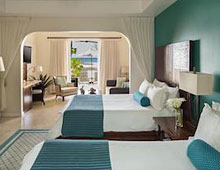 Hotel
Hotel 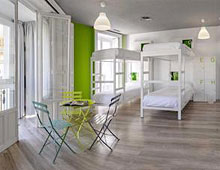 Budget accommodations
 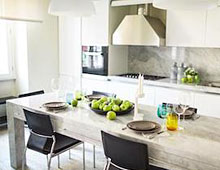 Apartments
  Family Hotel
 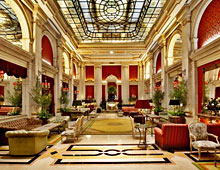 Luxury Hotel