DoubleTree by Hilton Hotel Sighisoara
Sighişoara - Consiliul Europei nr 6
Book now
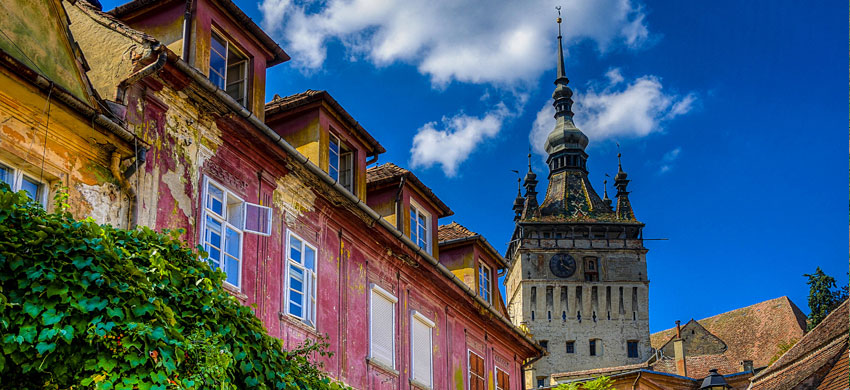
Sighișoara, declared a UNESCO World Heritage Site, is Romania’s most romantic city, thanks to its charming medieval town, characteristic squares and ancient walls. Founded by the Saxons in the late 12th century, Sighișoara reached its peak in the 15th century when it became a free city.
This architectural gem retains 9 of its original 14 towers, mighty bastions, medieval houses and an enchanting mix of winding cobbled streets, steep staircases, secluded little squares and a beautifully preserved citadel.
Every year, during the last weekend of July, Sighișoara hosts the Medieval Festival, an opportunity to relive the past through period music, dancing and costumes.
Sighișoara is also known as the birthplace of the Prince of Wallachia Vlad the Impaler, who inspired Bram Stoker’s famous novel, Dracula.
Wandering through Sighișoara’s streets, you’ll find plenty of things to visit that will keep you occupied for several days. Here are the most interesting ones, so you can grasp the essence of this city even in just a few hours.
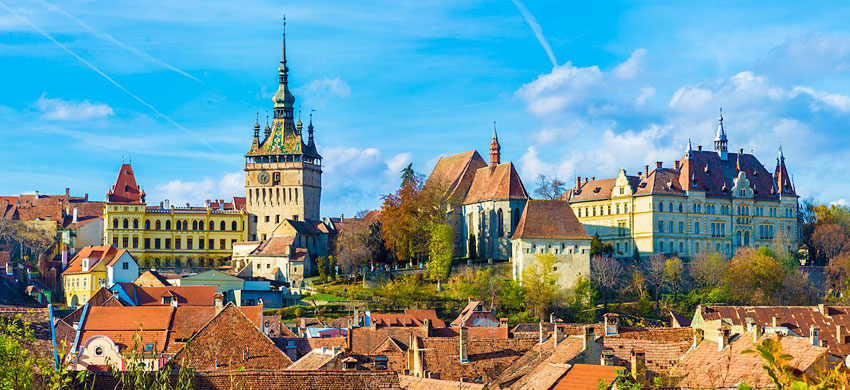
Also called the Council Tower because it hosted civic assemblies, the Clock Tower dates back to the 13th century and features an interesting carillon and ceramic roof. Known locally as Turnul cu Ceas, it also houses the History Museum dedicated to the city of Sighișoara, established in 1898.
It serves as the entrance to the Citadel, and at 64 metres tall it’s visible from virtually every corner of the city, making it Sighișoara’s undisputed symbol. The tower was restored in 1964 with the installation of an electric motor for the clock, which, when it strikes the hour, draws crowds of curious residents and tourists beneath it.
This beautiful church, built in late Gothic style with two naves and two rows of pillars, stands on the site where a Dominican monastery was constructed in 1289, later demolished in 1888.
It’s interesting to note that there are stylistic differences between the church’s interior and exterior: the interior is predominantly Baroque in style, whilst the exterior is Gothic. The western facade is particularly noteworthy, dominated by a triangular pediment topped by three large windows.
The most important piece of the church’s interior is a bronze baptismal font, the oldest element of the entire structure, dating from 1440 and crafted by a local artisan.
The church on the hill, or Biserica din Deal, is a church built in Gothic style that houses fragments of frescoes from 1480. The church is reached by a wooden covered staircase, known as the Scholars’ Staircase, as the hill on which it stands is named the Scholars’ Hill (Deal al Școlii in Romanian).
The church itself is one of the city’s most valuable monuments, the fourth Gothic church in Transylvania; its stylistic particularity is that it features elements of Romanesque style within.
In recent years, the church on the hill has undergone significant restoration work: the first was carried out in 1934, the second only in 2003. This latest restructuring earned it the “Europa Nostra” award presented by the EU for outstanding commitment to preserving historical and cultural heritage.
This is the place where Vlad the Impaler was born in 1431 and lived with his father, Vlad Dracul, until 1435 when they moved to Targoviste.
The house is located on Tin Street at number 1, between the citadel square and the clock tower. It is one of the city’s oldest stone structures and the ground floor is now a restaurant, whilst the first floor houses the Weapons Museum.
A few kilometres from Sighișoara stands the fortified evangelical church of Saschiz, dating back to the 13th century, built in honour of King Stephen I of Hungary. The church has a truly massive appearance, built in stone in Gothic style. The nave is wide and very long, and the choir is enclosed on three sides.
Beside it stands the bell tower, which in past centuries also served a defensive role, with openings where officials could insert rifles and shoot. Along with the nearby fortified church of Biertan, and a series of fortified churches scattered across various areas of Transylvania, this splendid structure is part of the UNESCO World Heritage Sites list.
In the following map you can see the location of the main places of interest mentioned in this article.
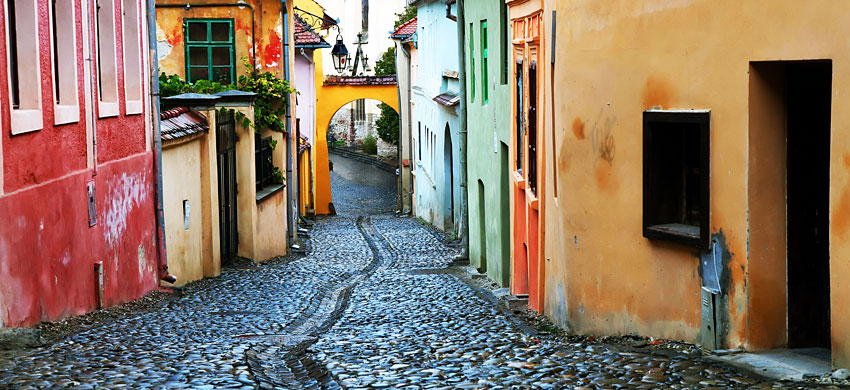
Sighișoara is a small city with just over 30,000 inhabitants, so regardless of where your accommodation is located, you’ll never be far from the centre. That said, we recommend staying within the Citadel or its immediate surroundings, so you can walk around without too much effort and have bars, restaurants, shops and services at hand.
There are several options for staying in Sighișoara, from small guesthouses to luxury hotels: there’s also a Doubletree by Hilton property, suitable for those seeking all the comforts, but it’s worth noting that lower-profile hotels can also provide excellent services and very competitive rates.
Sighișoara is best reached by car, incorporating it into a road trip across Romania. The nearest international airports are Cluj-Napoca (165 km, approximately 2.5 hours), Bucharest (270 km, approximately 4 hours) and Timisoara (350 km, approximately 4 hours). The closest airport to Sighișoara is Bacau, about 1.5 hours’ drive away, though unfortunately there are no direct flights from the UK.
Sighișoara, in the heart of Transylvania, is easily accessible by car from Brasov, just over 100 kilometres to the north-west, and from Sibiu, approximately 90 kilometres to the north-east. The Sibiu-Sighișoara-Brasov triangle is one of the most interesting and convenient Transylvania mini-tours, perfect even for those with limited time, given the short distances involved.
What's the weather at Sighișoara? Below are the temperatures and the weather forecast at Sighișoara for the next few days.
 Hotel
Hotel  Budget accommodations
 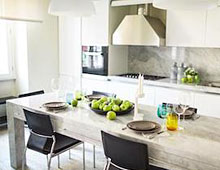 Apartments
 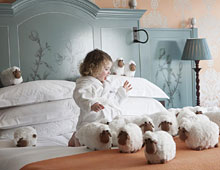 Family Hotel
 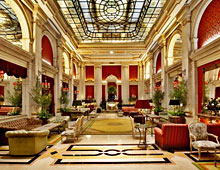 Luxury Hotel