Grand Hotel
Târgu-Mureş - Piata Victoriei 28-30
Book now
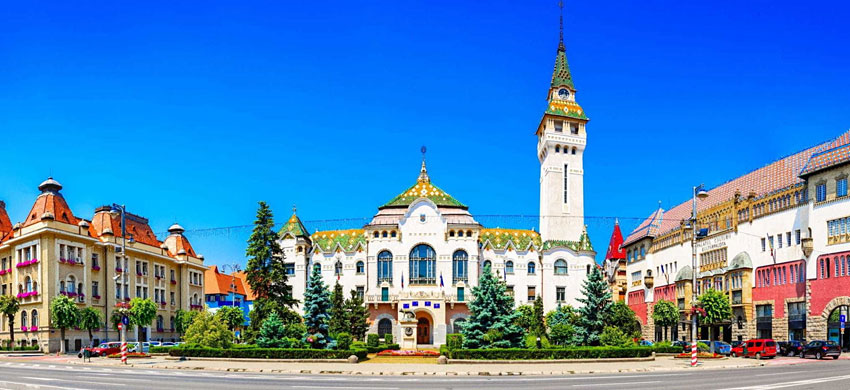
In the heart of Transylvania lies the town of Târgu Mureș, known as the city of roses. From the 16th century onwards, the town became an important cultural and commercial centre after being transformed into a fortified city in the 13th century.
The Citadel of Târgu Mureș was built around a monastery and a Franciscan church. The city walls, square watchtowers and bastions, added between 1613 and 1629, are particularly impressive, as are the continuous façades reinforced internally with arches. The fortress hosts events throughout the year and houses a museum. Târgu Mureș also boasts several beautiful palaces, including the Palace of Culture, built in Art Nouveau style, and Toldalagi Palace, constructed in 1762 in Baroque style, which houses the Ethnographic Museum.
Târgu Mureș is home to a series of fascinating monuments, palaces and religious sites worth visiting. Here are the main attractions.
The medieval citadel of Târgu Mureș, in Romanian Cetatea Medievală, represents the ancient heart of the town. Inside you can visit a beautiful fortress, the museum of history and archaeology, the statue of Tamas Borsos and the fortress church. The ancient walls are also worth seeing, excellently preserved and visible both from inside the citadel and from outside, where a pleasant pedestrian walkway has been created.
The fortress church, in Romanian Biserica Reformată din Cetate, is the oldest religious building in Târgu Mureș. Located within the citadel, it dates back to the 14th century and comprises a monastery, a chapel, the church and the bell tower, which stands 50 metres high across four storeys. All the buildings are constructed in late-Gothic style.
In 2010, a Franciscan friar’s seal was discovered at the church, left behind when the friar visited centuries ago. It was common practice for the order to send friars to different monasteries every one or two years to inspect the activities taking place there.
The Palatul Culturii of Târgu Mureș is located in the town centre and houses three important institutions: the Mures County Library, the County Museum and the Philharmonic Orchestra of Târgu Mureș. Listed among Romania’s historical monuments, the Palace of Culture has been a true cultural symbol of the town since its construction between 1911 and 1913, commissioned by the mayor at the time, Hungarian György Bernády.
Built in Art Nouveau style, the Palace of Culture comprises three buildings. Upon entering the imposing atrium, the upper floor features the magnificent hall of mirrors, as well as a concert hall with a capacity of 700 seats and a smaller hall with 200 seats, splendidly decorated with floral motifs, which is used for cultural and scientific conferences as well as some theatrical performances.
This magnificent synagogue, also known locally as “the great temple” or “the great synagogue”, is the cultural centre of Târgu Mureș’s Jewish community. It was built during the Austro-Hungarian period, at the end of the 1800s, and in 2004 was added to the list of historical monuments of Mures County.
The synagogue’s style is eclectic, blending features from various architectural schools. On the exterior, you can see elements typical of Romanesque architecture and some Gothic inspiration, such as the rose windows, as well as references to Moorish-Islamic style, such as the dome profiles. A recent restoration saw the Status Quo Synagogue painted in apricot orange, with all the ornaments and window frames painted white.
The Teleki Library, founded by Hungarian Count Samuel Teleki in 1802 when Transylvania was under Habsburg control, houses one of the region’s most extensive book collections. It holds over 200,000 volumes, many of them rare, and an impressive scientific archive.
The entire book collection is divided into a series of smaller libraries, the two main ones being Count Teleki’s original library with 40,000 books and the Bolyai Library, which contains 80,000. The remainder forms what is called the “miscellaneous collection“, made up of donations from private individuals and religious organisations.
In the following map you can see the location of the main places of interest mentioned in this article.
Being a compact town, it’s advisable to stay close to the citadel, which represents the historic centre, or in its immediate vicinity, so you have access to all services, shops and restaurants. Staying in Târgu Mureș is decidedly economical by Western standards, with several hotels maintaining more than acceptable standards and a range of guesthouses and family-run accommodation that allow you to immerse yourself completely in the local reality.
Târgu Mureș has a small international airport, though it is not connected to the UK with direct flights. Therefore, you will need to land in Cluj-Napoca and continue by public transport or with a rental car for a journey of approximately 100 kilometres.
It is certainly possible to reach Târgu Mureș by car, although the journey is rather long: you should allow approximately 16 hours from London and around 20 from Manchester; travelling by coach, journey times at least double due to the numerous stops to pick up passengers along the way.
Those already in Romania who decide to visit Târgu Mureș can reach it by car or coach in a relatively short time: the town is approximately 350 kilometres from Bucharest, Timisoara and Iasi. The journey takes between 5 and 6 hours.
What's the weather at Târgu Mureș? Below are the temperatures and the weather forecast at Târgu Mureș for the next few days.
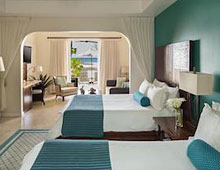 Hotel
Hotel 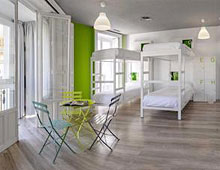 Budget accommodations
 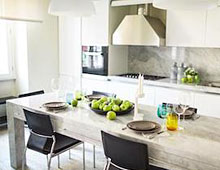 Apartments
  Family Hotel
 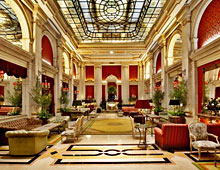 Luxury Hotel