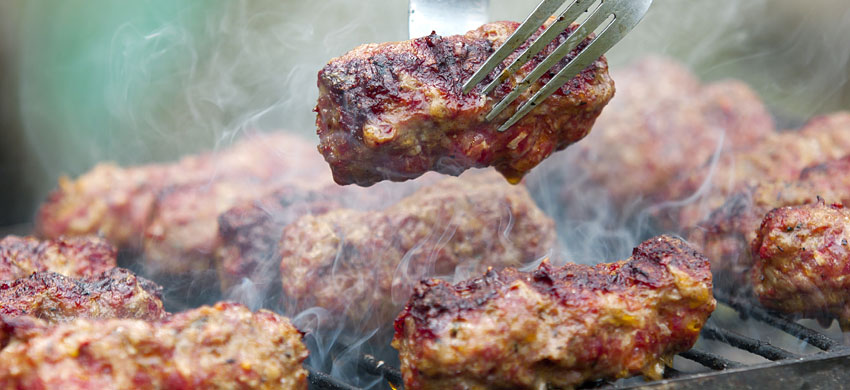
Romanian gastronomy, increasingly appreciated on the international stage, is remarkably diverse, with traditional menus varying considerably from region to region. However, a typical meal generally follows a consistent pattern: an appetiser featuring vegetables, cured meats and cheeses; a first course of soup; a main course of meat or fish accompanied by vegetables, salad or pickles; and, without fail, a dessert.
Every restaurant in Romania proudly features traditional peasant dishes among their specialities, even in Bucharest’s dining establishments.
In Dobruja, a region bordered by the Danube and the Black Sea, fish is understandably the star ingredient, prepared in countless ways. Classic appetisers feature pike roe cream, smoked sturgeon fillet or carp, and fried anchovies. A traditional Romanian fish soup invariably appears as the first course. For the main course, you must try saramura de crap or catfish (carp in brine), grilled catfish, or turbot with tomato and garlic sauce. If you prefer meat, lamb roasted in the oven or kid goat grilled over charcoal with wine are excellent alternatives.
Dobruja’s desserts bear Oriental influences, such as baclava or sarailie, reminiscent of a mille-feuille pastry layered with honey and almonds.
The gastronomy of Wallachia represents, for historical and cultural reasons, an excellent blend of Romanian, German and Hungarian flavours. Traditional dishes include carp stuffed with vegetables, mussels and smoked shin with beans. Not to be missed are brined lard, smoked pork ribs, smoked cheese, spicy sausages, “Cluj-style” sauerkraut, herb-roasted pork fillet and goulash. Meals are typically accompanied by palinca, a triple-distilled plum brandy. In Banat, the local cuisine has also incorporated several Serbian dishes, such as chicken soup.
Desserts, particularly strudel, show strong German influences.
The cuisine of Moldavia is particularly celebrated for its spiced meat-based soups and sarmalute, spiced meat meatballs wrapped in brined cabbage leaves with polenta, considered Romania’s national dish. Also worth trying are roasted chicken cooked in a cauldron with garlic sauce or pork fillet with Moldavian-style potatoes.
Amongst Moldavian desserts, poale in brau, a cheese-filled pastry, and delicious apple-filled focaccias deserve mention.
Romania boasts excellent indigenous grape varieties, the oldest being Cotnari, dating back before 1448. Notable Romanian wines include Aligote, Sauvignon Blanc from Sarica Niculitel or Murfatlar, Merlot from Murfatlar, and Cabernet Sauvignon from Sarica Niculitel or Oltina.
In Wallachia, thanks to the mild temperatures of Valea Mare and Stefanesti’s coastal regions, light and dry wines are produced, such as Sauvignon Blanc, Riesling, Feteasca Alba or Neagra, Merlot or Cabernet Sauvignon.
To accompany meat dishes, wines such as Cadarca or Kadarca from Minis, Feteasca Regala from Recas or Merlot from Uricani are recommended.
Also worth savouring are some wines ideally suited to pairing with Romanian desserts, such as Feteasca Alba or Moscato from Odobesti.
 Hotel
Hotel  Budget accommodations
  Apartments
  Family Hotel
  Luxury Hotel