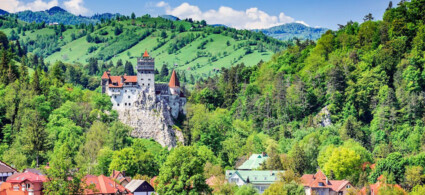
Dracula’s Castle
All the information you need for a visit to Dracula's Castle, or Bran Castle, one of Romania's most important attractions.
Read more
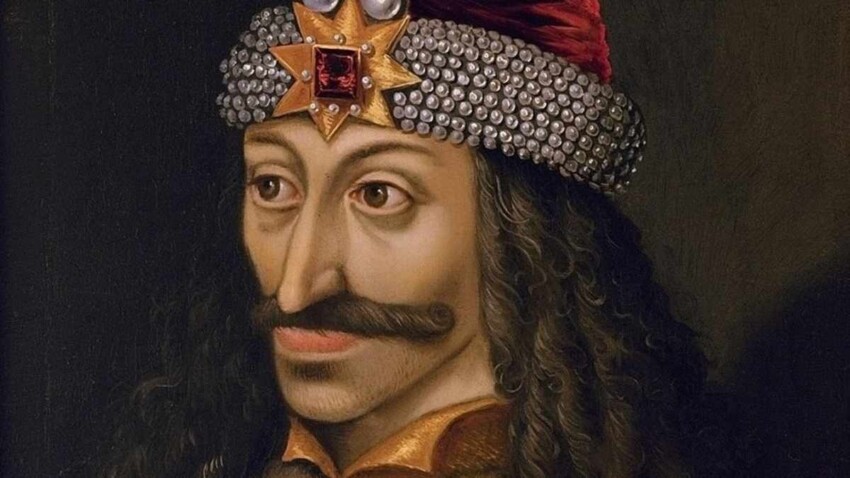
In 1462, as the Ottoman armies of Mehmed II advanced into Wallachia, the sultan’s soldiers encountered a spectacle destined to remain in collective memory for centuries: thousands of corpses impaled along the road to Târgoviște. That episode tells the story of Vlad III of Wallachia better than any other account—a figure who entered history as Vlad Tepeș, the “Impaler Prince,” and who, centuries after his death, became the inspiration for one of the most celebrated literary characters of all time.
Born around 1431 in Sighișoara, Transylvania, Vlad Tepeș ruled as Prince of Wallachia during three distinct periods between 1448 and 1476. His life was marked by imprisonment, exile, warfare and a brutality administered with method—interpreted by contemporaries as rigorous justice or absolute cruelty, depending on the source. Today his name is inseparable from the legend of Dracula, immortalised in 1897 by Bram Stoker’s novel.
For those visiting Transylvania and Wallachia, Vlad Tepeș is far more than a historical figure: he is a key to understanding the entire region, its medieval castles, walled cities and the complex relationship between history and legend that makes Romania a unique destination in Europe.
Vlad III belonged to the House of Drăculești, a branch of the Basarab dynasty that ruled Wallachia. The nickname “Dracul”—meaning both “dragon” and “devil” in Old Romanian—was first applied to his father, Vlad II, who was a member of the Order of the Dragon, a chivalric brotherhood founded by Holy Roman Emperor Sigismund to defend Christendom against Ottoman expansion. The son thus became “Dracula,” meaning “son of the Dragon.”
His political education was forged by years of captivity. Between 1442 and 1448 he was held hostage at the Ottoman court alongside his younger brother Radu, used by Sultan Murad II as a guarantee of his father’s loyalty. Those years of imprisonment exposed him to Ottoman tactics of power, whilst likely fostering resentment towards the empire he would fight throughout his life.
His first reign, in 1448, lasted only a few weeks. His second, between 1456 and 1462, was the most intense and controversial period: during these years Vlad consolidated his power by eliminating rebellious local nobility, conducted military campaigns against the Saxons of Transylvania and resisted the Ottoman invasion of 1462. His third reign, in 1476, was extremely brief: Vlad died that same year, probably in battle against Ottoman forces, though the precise circumstances of his death remain uncertain.
The method of impalement—from which derives his nickname Tepeș, “the Impaler”—was not Vlad’s invention. It was a common form of execution in the Ottoman world, which the prince adopted and amplified as a tool of deterrence and political communication. Contemporary sources, particularly the Saxon Chronicles of Brașov and German pamphlets printed between 1480 and 1490, describe his mass executions in considerable detail.
It is important to contextualise these accounts: the Saxon sources came from communities with whom Vlad was in open commercial and military conflict, and the German pamphlets were among the earliest examples of printed propaganda in European history. Modern historiography tends to acknowledge that many of the most extreme stories were exaggerated or invented by his political enemies.
Papal and Venetian diplomatic sources, by contrast, describe Vlad as an effective defender of the Christian frontier against Ottoman expansion. King Matthias Corvinus of Hungary, despite having imprisoned him for political reasons between 1462 and 1475, considered him reliable enough to free him and reinstate him as Prince of Wallachia. In Romania, to this day, Vlad Tepeș is celebrated by many as a national hero who defended the country’s independence.
The connection between Vlad Tepeș and Bram Stoker’s vampire is real but less direct than commonly believed. Stoker, who wrote his novel between 1890 and 1897 without ever visiting Romania, borrowed the name “Dracula” from a travel book about Transylvania written by orientalist William Wilkinson in 1820. In a handwritten note by Stoker preserved at the Rosenbach Museum in Philadelphia, his discovery that “Dracula” meant “devil” in Wallachian is visible.
The castle Stoker imagined for his Count Dracula has geographical features that correspond to no real place. Yet, following the novel’s success and especially the films of the 1920s and 1930s, Bran Castle—near Brașov—became the “Dracula’s castle” par excellence in the global tourist imagination.
The connection to Vlad Tepeș is tenuous: the prince stayed at Bran only briefly, perhaps as a prisoner of the Saxons. The castle with a much stronger historical link to Vlad is the Poenari Fortress, a crumbling structure in the Wallachian Alps that Vlad himself had reconstructed, using rival boyars as labour.
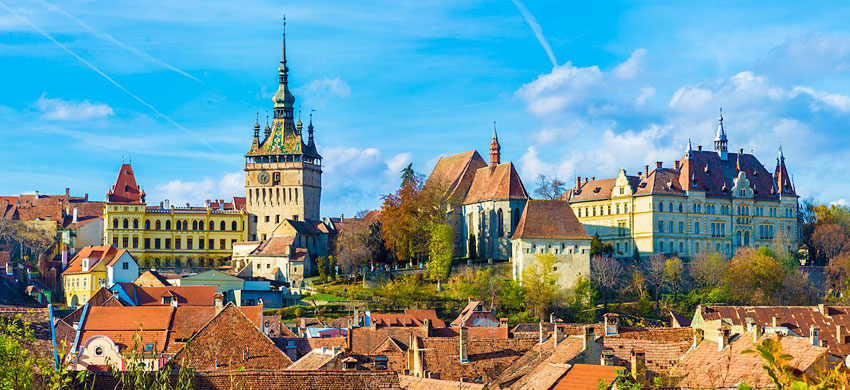
The historic centre of Sighișoara, a UNESCO World Heritage site, houses the building where Vlad Tepeș was born around 1431. It is a two-storey stone building in the medieval upper town, identifiable by the commemorative plaque on its facade. Today the building hosts a restaurant on the ground floor—a detail that carries a certain dark humour—and the town itself is among Europe’s best-preserved medieval citadels.
Walking the cobbled streets of Sighișoara, climbing the 14th-century clock tower and gazing from the upper town across the coloured roofs of the lower town offers an authentic immersion into Transylvanian medieval life, far removed from Dracula folklore. From Brașov, Sighișoara is reachable in about an hour and a half by car or train.
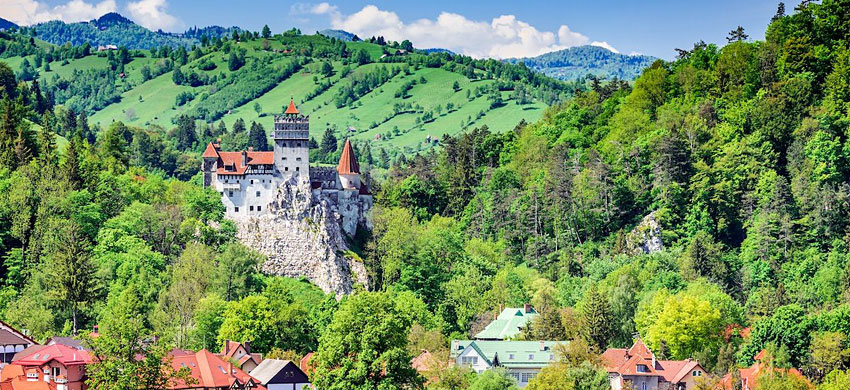
Despite the tenuous historical link mentioned above, Bran Castle is the most visited stop for tourists following the Dracula trail and absolutely deserves a visit for its architectural value alone. Built in the 14th century by the Teutonic Knights and subsequently passed to the Hungarian Crown, then to Wallachia and finally to the Romanian royal family, the castle dominates a mountain pass between Transylvania and Wallachia from a dramatic promontory.
The interior houses the original furniture and furnishings of Queen Mary of Romania, who transformed Bran into a royal summer residence in the early 20th century. For visitors to Romania, arriving early in the morning is advisable to avoid the crowds that gather during midday hours. The castle is located approximately 30 km from Brașov.
For those wishing to venture beyond folklore and touch real history, Poenari Fortress is an essential stop. Perched on a rocky outcrop in the Wallachian Alps and reached by climbing approximately 1,500 steps, this crumbling fortress was Vlad Tepeș’s royal refuge during his campaigns against the Ottomans. Legend has it that Vlad’s wife threw herself from the tower into the Argeș River to avoid falling into enemy hands.
The fortress sits along the Transfăgărășan road, one of Europe’s most spectacular mountain passes, which crosses the Carpathians connecting Wallachia to Transylvania. Combining a visit to Poenari with a drive along the Transfăgărășan—full details about the road available here—ranks among the most memorable experiences Romania has to offer.
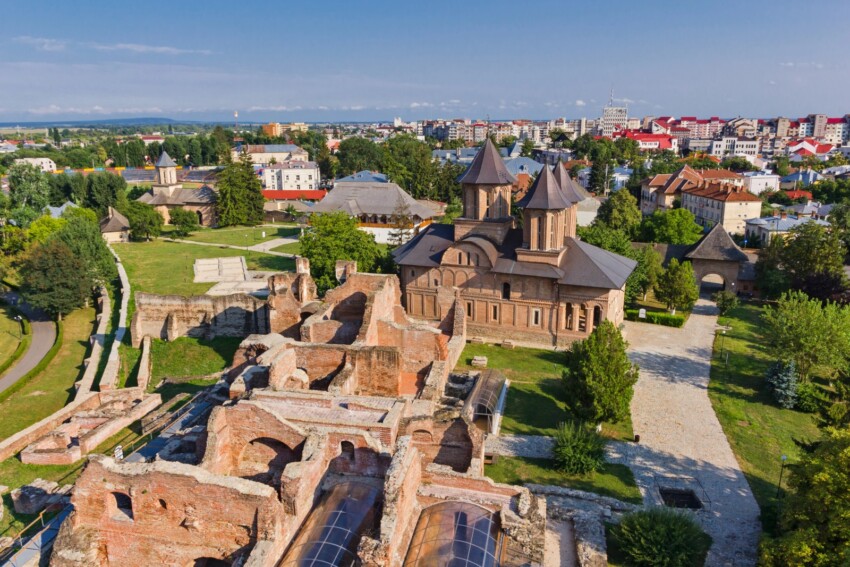
Târgoviște was the principal capital of Wallachia during Vlad Tepeș’s reigns. The ruins of the Princely Palace complex, now open to the public as a museum, include the Chindia Tower—still standing and accessible—from which Vlad is said to have enjoyed watching executions in the courtyard below. The city has an unpretentious, authentic character that visitors seeking unconventional tourism will appreciate.
Târgoviște is located approximately 80 km north-west of Bucharest and is easily reachable by car in less than an hour and a half. A visit to the princely complex pairs well with a walk through the city’s historic centre.
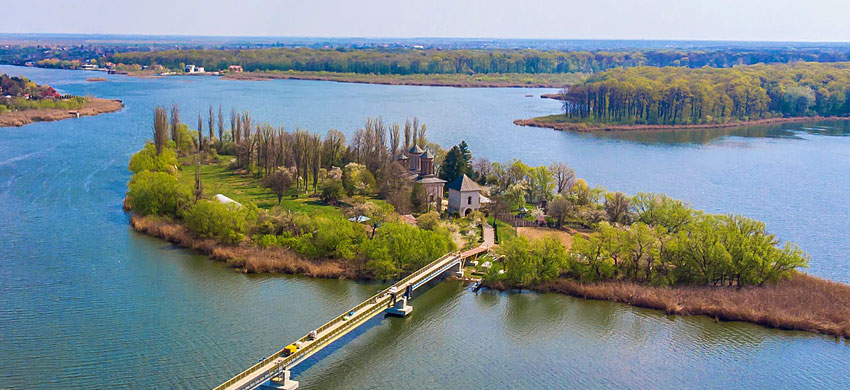
According to tradition, Vlad Tepeș is buried in the Snagov Monastery, situated on an island in the lake of the same name approximately 40 km from Bucharest. In 1931, excavations conducted by archaeologist Dinu Rosetti unearthed human remains near the church altar, associated with brocade fabrics consistent with 15th-century princely clothing. However, subsequent analyses have cast doubt on the identification, and the question of Vlad’s burial remains historically unresolved.
The monastery is accessible by boat from the landing on the lake shore. The atmosphere of the place—the small medieval church on an island surrounded by water, the silence, swans on the lake—is worth the visit regardless of the question of the tomb. More information about Snagov is available in our dedicated guide.
For those wishing to construct a thematic itinerary following the footsteps of Vlad Tepeș and the Dracula myth, Romania offers the opportunity to combine history, landscapes and folklore into a coherent journey. Our Transylvanian castle tour is an excellent starting point for planning stops such as Bran, Sighișoara, Peleș Castle in Sinaia and medieval Saxon fortresses.
Hiring a car is the most convenient solution for following this type of itinerary: Poenari Fortress, the Transfăgărășan and many of the sites linked to Vlad Tepeș are not easily reached by public transport. Full information on car hire in Romania is available in our dedicated guide.
No. Vlad Tepeș was a medieval prince who actually lived in the 15th century. His connection to vampires is the result of 19th-century literary invention: Bram Stoker drew inspiration from the name “Dracula” for his 1897 novel, but the character of Count Dracula is a fictional creation that blends Eastern European folklore with Victorian Gothic elements. The vampire myth in Eastern Europe predated Vlad Tepeș and had no direct connection to him.
This remains historically unresolved. Tradition points to the Snagov Monastery, near Bucharest, but archaeological excavations have yielded ambiguous results. Some historians suggest he may be buried at Comana Monastery in Wallachia, or that his remains were scattered or hidden over the centuries.
The connection between Bran Castle and Vlad Tepeș is historically tenuous: the prince probably stayed there only as a prisoner for a brief period. The link to Stoker’s novel is even weaker, as the author never visited Romania and the castle described in the novel has different geographical characteristics from Bran. That said, the castle is a medieval building of considerable architectural and historical interest, well worth visiting for its own merits entirely apart from the myth.
Yes, by a significant portion of Romanian public opinion. Vlad is often celebrated as a defender of Wallachian independence against Ottoman expansion and as an administrator who, despite brutal methods, imposed order during a period of great instability. This nationalist interpretation coexists with condemnation of his cruelty and awareness that many historical sources on his crimes were propagandistic in nature.
Yes, numerous local operators offer Dracula and Vlad Tepeș themed tours, typically departing from Bucharest or Brașov. These tours typically include Bran Castle, Sighișoara and, in some cases, Poenari Fortress. For those preferring independence, car hire remains the most flexible option.
Spring (April–May) and autumn (September–October) offer ideal conditions: mild temperatures, spectacular foliage in the Carpathians and smaller crowds than summer. Poenari Fortress and the Transfăgărășan Road are accessible only in summer. Halloween is naturally the peak season for themed tours, with special events at Bran Castle, but also the most crowded period.
Târgoviște is often overlooked by international tourism circuits, but precisely for this reason offers a more authentic experience. The Princely Palace complex with the Chindiei Tower is the place that most vividly evokes Vlad Tepeș’s concrete power, far removed from Dracula folklore. The visit pairs well with an itinerary that includes Curtea de Argeș, approximately 70 km away.
 Hotel
Hotel  Budget accommodations
  Apartments
  Family Hotel
  Luxury Hotel