Ramada Plaza by Wyndham Craiova
Craiova - Calea Bucuresti 1
Book now
The city of Craiova is located in the Oltenia region, in southern Romania, approximately 200 kilometres from Bucharest. Today a vibrant university city, Craiova was founded on the site of an ancient Dacian fortress along the routes that Eastern merchants travelled to reach Europe.
The city experienced its greatest splendour between the 14th and 15th centuries, and there are many medieval religious buildings worth visiting, including the Church of Cosuna Monastery, Craiova’s oldest building located a few kilometres from the centre, the Church of Madonna Dudu, renowned for its frescoes, and Casa Baniei, a 1699 building that houses the Ethnographic Museum of Oltenia. The historic centre is located east of Calea Unirii around Piata Vech, the Old Square.
Between the late 12th and early 13th centuries, Craiova’s architecture gave rise to the Brancovan style, a combination of traditional Romanian and Byzantine art with Venetian elements. This distinctive style can be admired in the Church of Saint Ilie, built in 1720, and in the Church of All Saints and the Obedeanu Monastery. The Craiova Art Museum is particularly impressive, housed in a 1907 neoclassical building, the Mihail Dinu Palace.
Craiova has a number of interesting monuments, museums and parks to visit. Here are the best ones to make the most of your time in the city.
One of Craiova’s unmissable attractions is the wonderful Nicolae Romanescu Park, one of Romania’s most important monuments of landscape architecture, designed by Frenchman E. Redont, who won a gold medal at the international exhibition in Paris in 1900.
Located at the southern end of the city, it is one of Eastern Europe’s largest parks, spanning over 90 hectares, plus a further 10 hectares of lake. Within the park are a series of architectural works and monuments not to be missed, including a suspension bridge, a castle, the Craiova hippodrome and the “belvedere dome”.
Nicolae Romanescu Park is also home to Craiova Zoo, one of Romania’s oldest zoological gardens. It houses numerous species of exotic animals including jaguars, tigers, lions, emus, as well as bears, wolves, capuchin monkeys and llamas.
The Oltenia Museum in Craiova dates back to 1915, and within an elegant building with vague Ottoman inspiration, it houses a series of artefacts that showcase the history of this region of Romania.
It is divided into 3 sections, one dedicated to the history and archaeology of Oltenia, one to natural history, established in 1923, and a third to ethnography. The entire collection is based on a series of donations made since its opening.
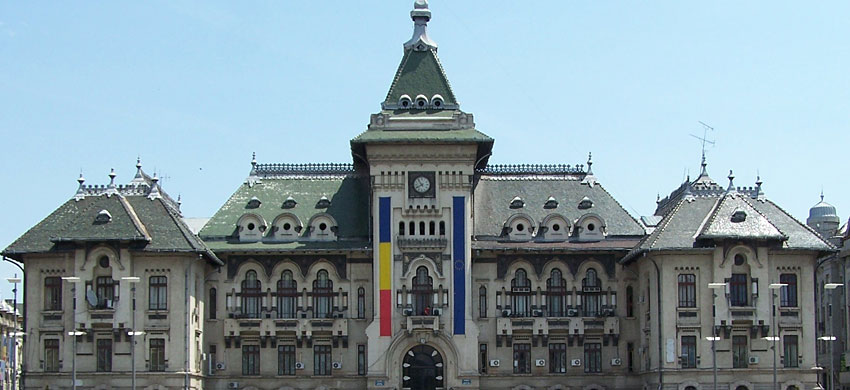
This is the city’s central square, impossible to miss. Bounded by Alexandru Ioan Cuza Street to the north and Oltet Street to the south, on one side stands the imposing administrative palace of Craiova, while on the other begins the Prefecturii Park, the main green space in central Craiova. Here you will find the musical fountain, the statue of Mihai Viteazul and the small Church of the Holy Trinity.
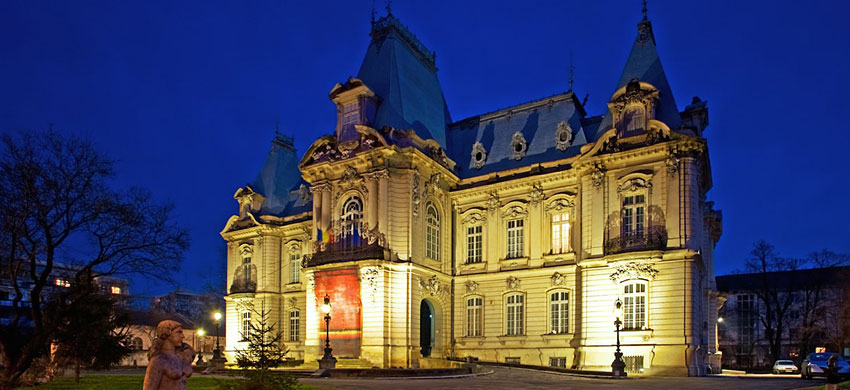
The wonderful Constantin Mihail Palace houses the Craiova Art Museum, one of the city’s most important museums. The building dates from the early 1900s, designed by French architect Paul Gottereau, and originally belonged to Constantin Mihail, a member of one of Romania’s richest and most influential families. Decorated with Carrara marble, Murano glass, Lyon tapestries and Venetian mirrors, it also hosted personalities of the calibre of the King of Romania, exiled Polish president Moscicki, and Yugoslav leader Tito.
In 1954, the rooms of the Constantin Mihail Palace were used to house the Craiova Art Museum, the city’s main museum and one of its most important tourist attractions. Noteworthy is the gallery dedicated to Romanian sculptor and painter Constantin Brancusi, where you can admire 6 of his early works. There are also galleries dedicated to major Romanian artists such as Theodor Aman, Nicolae Grigorescu, Vasile Popescu, and a number of other master painters.
The Saint Demetrius Cathedral is an Orthodox church and seat of the Archdiocese of Oltenia. Construction was completed in 1933, but it stands on the site where a church had already existed in the 14th century, which was later demolished in 1889.
The cathedral, built in Byzantine style, was designed by architect Andrè Lecomte du Nouy, and the foundation stone was laid on 12 October 1889. The interior is richly frescoed by two French and German artists.
Next to the Saint Demetrius Cathedral stands the bell tower, only about ten metres high, built in brick and plaster; its importance derives from the fact that, according to historian Bogdan Petriceiu Hasdeu, this part is the only remnant standing from the original 14th-century church.
In the following map you can see the location of the main places of interest mentioned in this article.
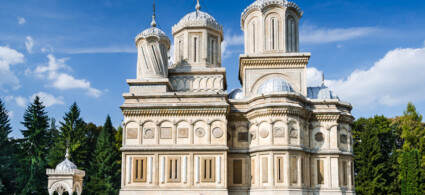
In the surrounding area of Craiova you will find Targu Jiu, an ancient market town and birthplace of Constantin Brancusi, considered by many the father of modern sculpture, the Horezu Monastery, a masterpiece of Brancovan style, founded in 1690, renowned for the richness of its sculptural and pictorial decoration, and the Curtea de Arges Monastery, another splendid architectural gem from the 16th century.
Craiova is a city of almost 300,000 inhabitants, whose metropolitan area extends over an area of almost 1,500 square kilometres, although the city proper occupies “only” 80. It is therefore quite sprawling, but choosing where to stay is simple: just remain in the central area, between Calea Bucuresti avenue and the Piata Centrala market, or in the vicinity of the university or administrative palace, in Mihai Viteazul Square.
By choosing this area you have all services within reach, including bars, restaurants, nightclubs, banks, shops and pharmacies, and at the same time you can reach the main tourist attractions on foot.
Staying in Craiova is very affordable compared to Western European standards. There are numerous hotels offering excellent services at a fraction of the price we are accustomed to paying, while for those who prefer to experience local life we recommend staying in a guesthouse or apartment, facilities run by residents of the city, who can give you useful advice on your itinerary, sightseeing and cuisine.
Getting to Craiova from the UK is very straightforward, as the city has a small international airport used by Wizz Air for routes to and from Bergamo, Bologna and Rome Fiumicino. There are many flights and often at excellent prices, so flying is certainly the best way to get to the city.
Alternatively, you can certainly reach Craiova by road: the distance from London is approximately 24 hours, whilst from Paris it takes about 20 hours. Be aware, however, that the shortest route passes through Serbia, a non-EU country, and therefore you will have to cross two borders, one on entry and one on exit, with possible long waiting times. Also check that your insurance is valid for travelling in Serbia. Alternatively, by extending your journey by a couple of hours, you can bypass Serbia by travelling through Hungary, then entering Romania from the Nadlac border crossing, near Arad and Timisoara.
If you are already in Romania, you can reach Craiova comfortably by car, as the city is connected to the rest of the country by state roads 6, 6B, 65, 55 and 65C. Its position in the south-western corner of the country means that distances from other cities are never too short: from Bucharest it takes approximately 3 and a half hours, from Timisoara almost 5 hours, from Cluj-Napoca and from Constanta approximately 6 hours.
What's the weather at Craiova? Below are the temperatures and the weather forecast at Craiova for the next few days.

 Hotel
Hotel 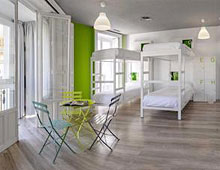 Budget accommodations
 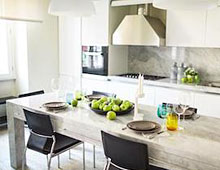 Apartments
  Family Hotel
  Luxury Hotel