Hotel King
Târgovişte - Bd. Carol I, nr. 7
Book now
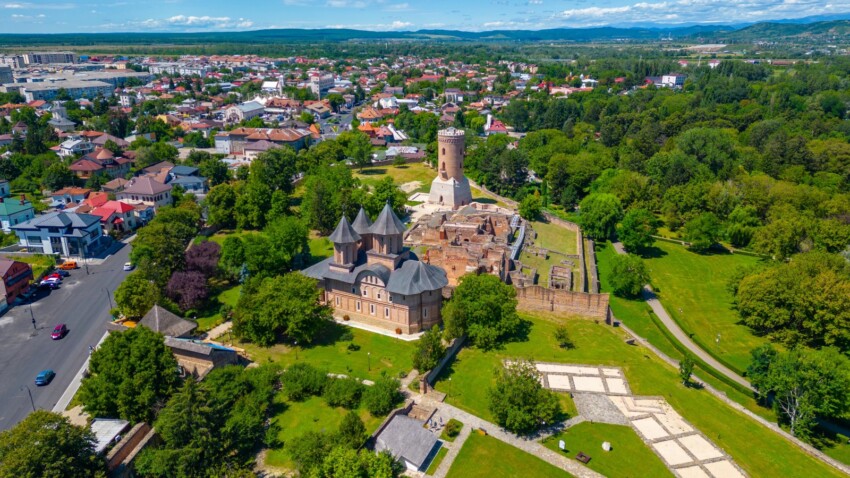
Targoviște is a city that carries the weight of history with understated grace. Capital of Wallachia for over two centuries, seat of power for Romanian princes and home to Vlad Tepeș, today it is a quiet provincial town that major international tourist circuits rarely pass through — and for this very reason, it retains an authenticity that is hard to find elsewhere.
The city lies in the heart of the Wallachian plain, at the foot of the southern foothills of the Carpathians, in Dâmbovița county. With around 70,000 inhabitants, it is not a metropolis, but the density of history preserved in its centre is remarkable: seventeenth-century churches, medieval monasteries, the Princely Palace complex and one of Romania’s best-preserved medieval towers.
Targoviște is also linked to one of the most dramatic episodes in the country’s recent history: it was here, in the local military barracks, that on 25 December 1989 Nicolae and Elena Ceaușescu were tried and executed, ending forty-two years of communist rule. A dual past — medieval and contemporary — that makes the city a destination of great interest for those wishing to venture beyond Romania’s more well-trodden paths.
Targoviște can be comfortably visited in a day, but those who arrive prepared and with the right spirit of exploration will find reasons to stay longer. The main attractions are concentrated in the historic centre and immediate surroundings, with some surprises that reveal historical significance greater than the city’s low profile might suggest.
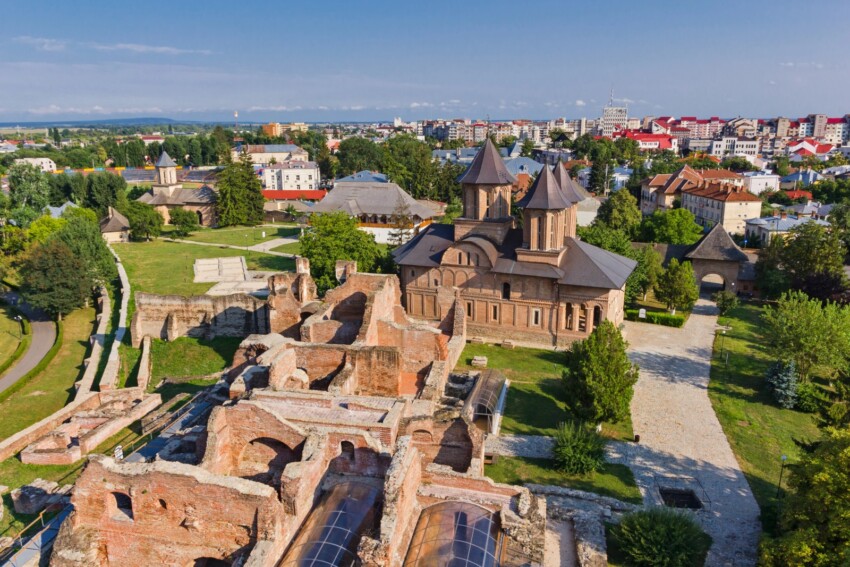
This is the historic heart of the city and the main reason why Targoviște deserves a visit. The Princely Palace Complex (Curtea Domnească) brings together the remains of the palace of the Wallachian princes, built from the fourteenth century onwards and expanded in subsequent centuries. Within the area are the ruins of the Throne Room, the Princely Church of Înălțarea Domnului — still in excellent condition, with interior frescoes dating from the seventeenth century — and the Chindiei Tower.
The complex is open to the public as an open-air museum. Walking amongst the ruins of the palace and imagining the Wallachian court of the fifteenth century is an experience that, removed from the flows of mass tourism, has a rare sense of contemplation. Allow yourself time to explore the details of the frescoes in the princely church, often overlooked by hurried visitors.
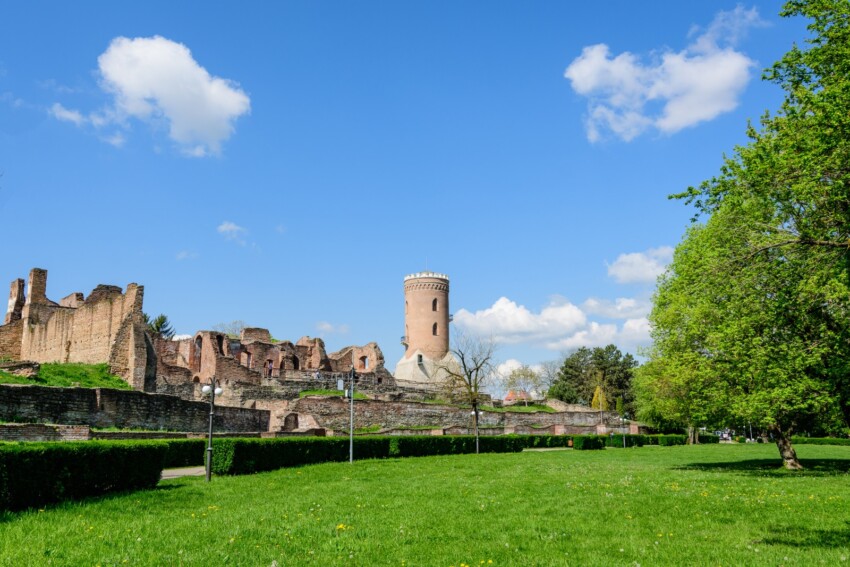
The Chindiei Tower is Targoviște’s emblem and the most photographed element of the princely complex. Standing approximately 27 metres high, it was erected in the fifteenth century — probably during the reigns of Vlad Tepeș or his successor Radu cel Frumos — serving as a watchtower and control point for executions in the courtyard below. Today it houses a small exhibition of medieval weapons and objects, and from its summit you can enjoy views of the city’s roofscape and the Carpathians on the horizon.
The tower is in excellent condition and the climb, though involving steep and narrow stairs as in all similar medieval buildings, is accessible. It is advisable to visit in the early morning hours, when the light on the Carpathians is particularly fine.
Just steps from the princely complex stands Stelea Monastery, one of Wallachia’s most significant religious monuments. The church was built in 1645 at the behest of Prince Matei Basarab and Moldovan nobleman Vasile Lupu, in a style that blends Wallachian religious architecture with Moldovan and Constantinople influences. The partially preserved interior frescoes display an iconographic cycle of great refinement.
The monastery remains active as a monastic community. The inner courtyard, with its stone colonnades and manicured garden, offers an atmosphere of tranquillity that pleasantly contrasts with the museum-like character of the nearby princely palace. Admission is free, but respectful dress is recommended.
Housed in a neoclassical building in the city centre, the Museum of the History of Dâmbovița County provides a comprehensive overview of the territory’s history from prehistoric times to the modern era. The medieval section is the most extensive, with finds from excavations of the princely palace, objects related to Wallachian rulers and a collection of period weapons and coins.
One room is dedicated to communist history and the fall of the regime in 1989, with documents and photographs from the Ceaușescu trial. For those interested in Romania’s contemporary history, this section is of considerable documentary interest.
In the Târgoviște Barracks, now home to an active military unit, stands the place where Nicolae and Elena Ceaușescu were tried in a summary military tribunal and executed on 25 December 1989. Access inside the barracks is not freely available, but near the entrance a commemorative plaque has been installed, and depending on the period, it may be possible to take part in organised guided tours.
This site has a historical and symbolic significance that goes beyond traditional tourism: it is one of the places where the Cold War concretely ended in Eastern Europe. For those wishing to delve into this chapter of Romanian history, a visit to Targoviște takes on a meaning that extends beyond medieval heritage.
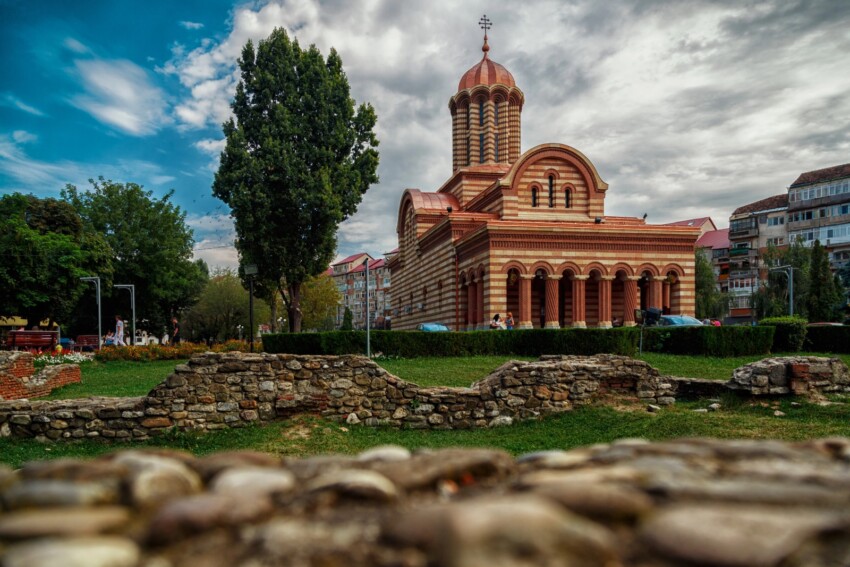
The Episcopal Cathedral, dedicated to the Nativity of the Virgin Mary, is the most imposing religious building in the city centre. Built in the nineteenth century in Neo-Byzantine style and restored numerous times, it houses the remains of some Wallachian princes. The interior is richly decorated with mosaics and modern frescoes following Eastern Orthodox iconographic tradition.
The cathedral stands in the city’s main square and is the visual focal point of the centre. On Sunday mornings, during liturgical services, the atmosphere is particularly evocative and offers an authentic glimpse into local religious life.
For a break from visiting historical monuments, Belvedere Park offers a landscaped green space overlooking a small artificial lake in the heart of the city. The park is frequented by residents and hosts summer concerts and open-air cultural events. It is the ideal place to observe Targoviște’s everyday life from a perspective beyond pure tourism.
The park features some commemorative sculptures and a children’s play area. For those visiting the city with children, this green interlude — combined with an ice cream from one of the parlours near the centre — provides an energy boost before continuing your exploration.
Targoviște’s accommodation offer reflects its character as a provincial town: you will not find large international hotel chains, but a selection of locally-run hotels and bed & breakfasts in the historic centre and surrounding areas. Those seeking lodging in the heart of the city, within minutes’ walk of the princely complex and cathedral, will find small hotels and guesthouses with good value for money, typically superior to Bucharest at equivalent comfort levels.
Those preferring the tranquillity of the countryside or wishing to combine a city visit with exploration of the Carpathian hills on the county’s northern edge will find guest houses and farm stays in hamlets around Targoviște offering accommodation with gardens and breakfasts featuring local produce. This option is particularly recommended in summer, when the heat of the Wallachian plain becomes oppressive.
Targoviște is located in the Wallachia region, 80 km north-west of Bucharest and approximately 100 km east of Pitești, at the foot of the southern Carpathians. Its geographical position makes it easily accessible from the Romanian capital in less than two hours, making it an ideal destination for a day trip.
The main airport is Henri Coandă International Airport in Bucharest (OTP), Romania’s principal hub, served by numerous direct flights from across Europe. From the airport, the most convenient way to reach Targoviște is car hire: taking the A3 motorway northbound and then the DN71 national road, you reach the city in approximately an hour and a half. Alternatively, you can first reach Bucharest Nord railway station by train or bus, then take a train to Targoviște.
Targoviște is connected to Bucharest Nord station by regional trains with a frequency of around 4-6 services daily. Journey time varies between 2 and 2.5 hours depending on the train type. Tickets are purchased at the station or via the CFR Călători website. Targoviște railway station is approximately 15 minutes’ walk from the historic centre.
The car is the most flexible and recommended option, especially if you intend to combine your Targoviște visit with excursions to nearby areas. From Bucharest take the A3 motorway until the Ploiești exit, then the DN71 heading west for approximately 50 km. The route is well signposted and under normal conditions takes about an hour and twenty minutes. Parking in the centre is generally straightforward and free on side streets.
Targoviște’s location makes it an excellent base for exploring some of Wallachia and the southern Carpathians’ most fascinating destinations. Hiring a car — find all the information in our guide to car hire in Romania — is the most practical choice for moving freely between these places.
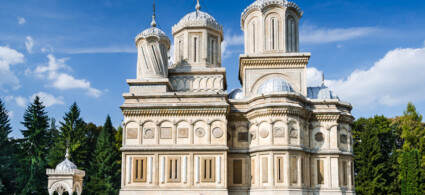
Approximately 70 km to the west lies Curtea de Argeș, home to its episcopal cathedral — one of the gems of sixteenth-century Romanian religious architecture — and the ruins of the ancient princely palace. Proceeding north along the Argeș valley you reach Poenari Fortress, the Wallachian castle genuinely linked to Vlad Tepeș, and from there the spectacular Transfăgărășan road, open in summer, which crosses the Carpathians into Transylvania.
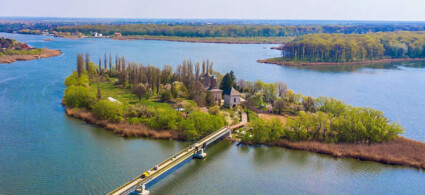
Heading east, approximately 80 km away, are the lake and Snagov Monastery, with the tomb traditionally attributed to Vlad Tepeș. In the same direction you quickly reach Bucharest, where you can conclude a two or three-day Wallachian itinerary combining medieval history, mountain landscapes and metropolitan life.
What's the weather at Targoviste? Below are the temperatures and the weather forecast at Targoviste for the next few days.
 Hotel
Hotel 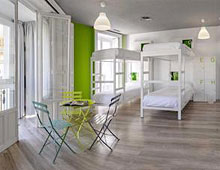 Budget accommodations
 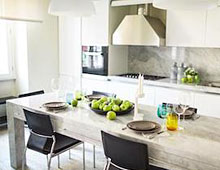 Apartments
  Family Hotel
 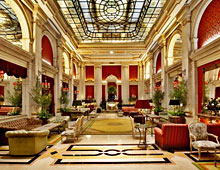 Luxury Hotel